All Game Accounts on the Huawei Channel Banned? Why? A Technical + Legal Analysis
A technical analysis of the Huawei account SDK bug caused by a NULL default value in the database that mistakenly flagged all channel server players as minors, along with a discussion of player compensation possibilities and the risks of platform SDK binding.
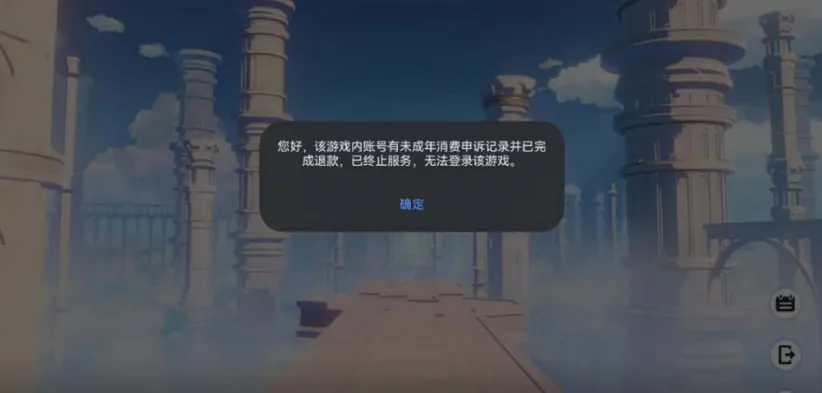
Early this morning (March 17, 2026), Huawei channel server players woke up to find they had “become minors overnight”:
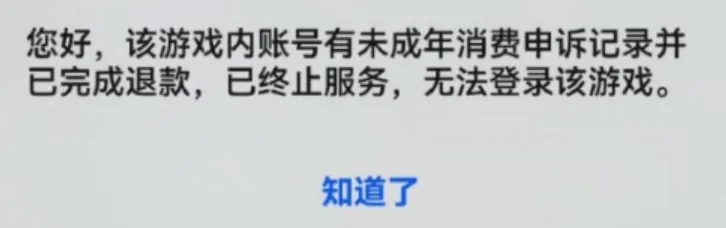
They couldn’t log into their games and could only contact customer service.
A quick search revealed that any account using Huawei login might be affected.
Everyone was sure they had adult accounts and had never applied for a minor refund.
Where did the problem come from?
1. “Wait till you become a minor, then you’ll know”
Waking up, many adult players suddenly found they couldn’t log into their games — just a single notification.
This affected multiple games, including but not limited to: Identity V, Onmyoji, Egg Party, Shining Nikki, Where Winds Meet, Reverse: 1999, Tom and Jerry, Plants vs. Zombies: Keep It Casual, Travel Frog, Justice Mobile, Nikki, Light and Night, Lovebrush Chronicles, and more.
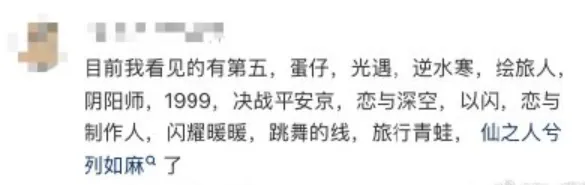
Players were certain their accounts were adult accounts with no involvement in minor refunds.
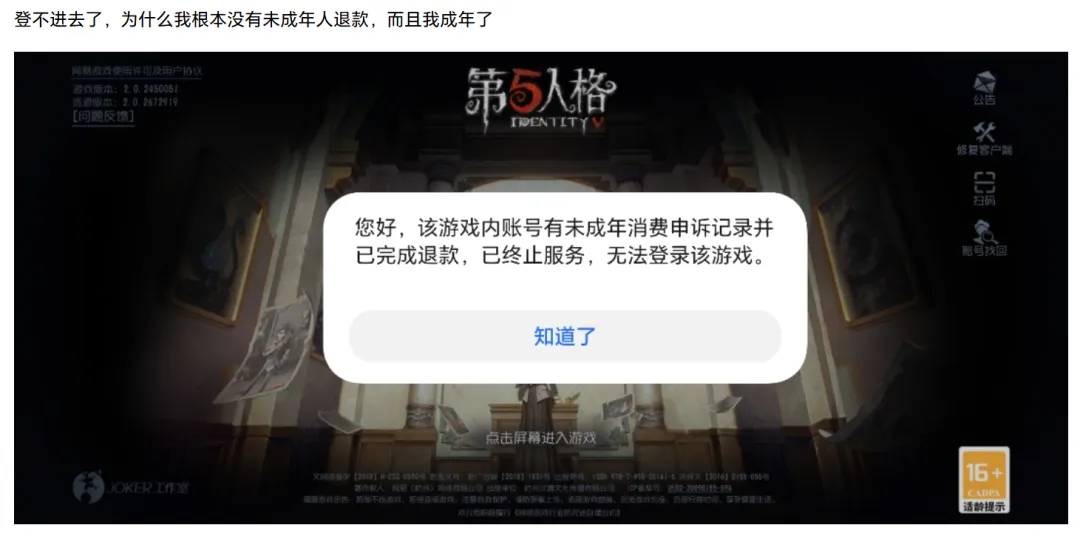
Amid the players’ fervent inquiries, a game customer service representative revealed the truth:
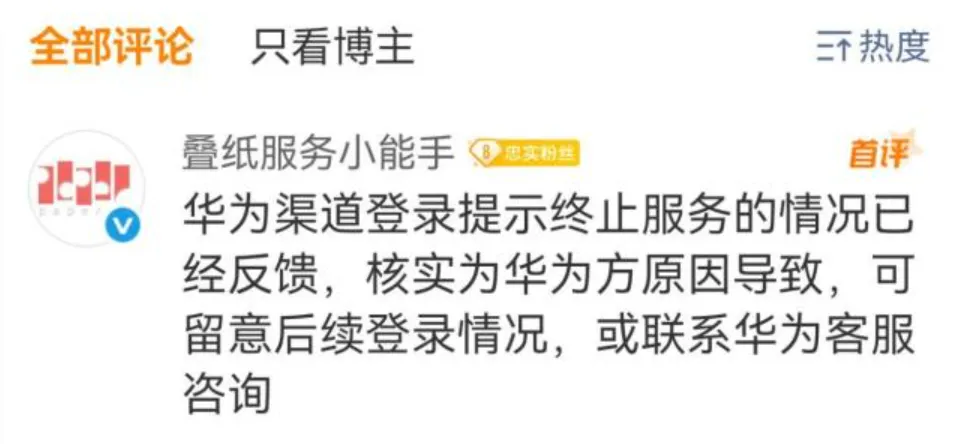
Fortunately, the bug was fixed soon after — players just needed to log in again.
Just wonder what severity level this bug will be classified as, and what consequences the responsible parties will face.
Guess it depends on whether it gets defined as “system or software maintenance or upgrade”:


2. So What Caused It?
Officially, it was a “technical issue” causing a “false ban.” Technically, my guess is that a bug was introduced by incorrectly setting a default value (also called a default value) when upgrading the database.
From the notification text, this appears to be a newly added feature — Huawei intended to ban certain players directly at login (e.g., those who had refunded as fake minors).
Since this was a new feature, the server needed a way to know whether to ban someone. This would require adding a new column to the database, for example:
ALTER TABLE users ADD COLUMN is_refunded BOOLEAN DEFAULT FALSE;This line modifies the existing user table structure by adding a column called is_refunded at the end, making it easy for the backend to identify whether the account has undergone a minor refund. Default value is FALSE — change it later as needed.
My guess is that a programmer might have forgotten the Default value when typing the command, resulting in:
ALTER TABLE users ADD COLUMN is_refunded BOOLEAN; Now the default value is NULL.
Then the server’s logic might be something like:
// Pseudo-code
// Fetch user info from database
User user = database.getUser("zhangsan");

// Check if refunded — if the value isn't FALSE (never refunded), block login
if (user.isRefunded() != false) {
    blockLogin("Sorry, this game account has a minor consumption dispute record and has been refunded. Service terminated. Unable to log into this game.");
}
But in many programming languages, Null does not equal False.
So this condition would always return “has refunded.”
And because this error occurred at the Huawei account SDK level,
it ultimately affected everyone, across all games, turning them all into “minors.”
Of course, fixing this potential P0-level error is very fast — just one command to set everyone’s is_refunded value to FALSE.
The fix is as fast as the database can execute.
3. What Else Can We Learn?
The “false ban” is just the surface. From this incident, we can see the following:
Huawei Is Getting Serious About “Fake Minor Accounts” (not a typo)
Or rather, getting serious about “refunded accounts.”
Currently, once a refund has been processed for a game, the entire Huawei account is affected.
All other games will be blocked from login due to this SDK validation.
Previously, minor refunds were handled by game developers themselves — marking it in the backend or simply clearing user data.
That is, banning only that specific game.
But this Huawei SDK reveals a “full ban” approach.
No matter how many game accounts are bound to the Huawei account, all are banned in one fell swoop.
Before, if a child picked up a phone, downloaded, and made purchases in a game the parent didn’t play, you’d definitely apply for a refund. The game being banned was no big deal.
But under the new rules, the entire account could be lost. Would you still apply?
Of course, this could also just be to deter malicious refund applications from “fake minors.”
Genuine accidental top-up refunds would have other verification methods.
Better to Maintain Multiple Accounts
“One account for everything” — logging in via platform SDKs (like Huawei, Xiaomi, Bilibili, etc.) is certainly convenient.
Players get unified account management without needing to register or remember multiple accounts.
But conversely, when the channel’s underlying service (like this account SDK) has an issue, it’s “death sentence for everyone.”
If you use the official server account, you could switch to another game as a temporary fix.
With “one account for everything,” there’s really no alternative.
Moreover, when you bind a platform account, the platform account takes precedence over the official account.
For example, while searching news, I noticed a familiar sight:
Some commenters said, “Huawei doesn’t have Genshin Impact — there’s only the official server and a Xiaomi server (already closed).”
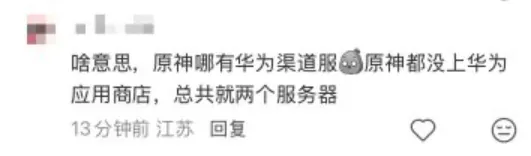
That’s not quite right.
The HarmonyOS version of Genshin Impact actually supports binding a Huawei account to a miHoYo account, allowing login via either account with the same progress.

Of course, I don’t know if the screenshot-taker tried logging in with a miHoYo account, or if that would have been rejected too. But at minimum, if you bind a Huawei account and log in with it, the Huawei account’s judgment takes priority over the miHoYo account, leading to the same treatment:
Banned together.
Multiple Checks Needed Before Pushing to Production
For such a serious bug to be pushed to production, there was likely a gap in the testing process before release.
The programmer writing the SDK validation code may not have anticipated all scenarios;
testers may have only tested the new feature itself (e.g., checking if an account tagged “refunded” was properly blocked) without considering how the login logic would handle is_refunded defaulting to NULL;
and the person writing the SQL may not have noticed the default value issue.
A series of small “mays” led to this major incident.
Of course, this is just my speculation.
Without Huawei disclosing the specifics, nobody can know for sure.
But one thing is certain: someone probably got “graduated.”
After all,
if it compiles and runs, either the code or the person will be on the run.
4. Can Players Demand Compensation from Game Companies?
Monetary Compensation — Probably Not
From the technical analysis, the root cause was in Huawei’s account SDK, not the game developers (like Papergames, NetEase, etc.).
Players’ service agreements are with the game companies, but the game companies themselves are also “victims” of this incident. They had to deal with players’ fury and likely lost revenue from hours of interrupted login.
If players seek compensation from the game company, the company can say, “This is a channel issue — there’s nothing we can do.” (It’s true — why not use the official account?)
Some readers might say, “Like buying a defective product from a supermarket — I go to the supermarket (game developer), and the supermarket goes to the supplier (Huawei), right?”
That brings up another problem: the losses can’t be quantified.
Can’t calculate it — so forget it.
To claim compensation legally, you need to prove clear, quantifiable losses.
What did players lose from a few hours of login failure?
In-game virtual assets? No — the rare items in their inventory and backpacks are all still there.
Missing a limited-time event? That might be somewhat relevant, but few games run limited events on weekday mornings anyway.
“Emotional distress”? (“I can’t play XX — I’m going to die!”) The chances of getting such a claim supported in legal practice are about the same as pulling ten golden characters in a single ten-pull.
Without direct, quantifiable property loss, the possibility of obtaining compensation through litigation is virtually zero.
Suing would be very difficult to win.
Compensating with In-Game Items Is Possible — But Who Pays?
For game companies, even if they aren’t directly responsible, maintaining the player community and calming player sentiment is a top operational priority.
Therefore, following industry practice, when such server-wide login or service issues occur, game developers usually issue “server-wide compensation.”
Typically, this is done via in-game mail, distributing virtual items to all players. Whether the items are good stuff or inventory junk depends entirely on the developer’s conscience, with no legal requirement.
But items have costs — so who bears those costs?
Given that this incident’s impact was relatively limited, developers might just eat the cost.
Under typical game operation agreements, it’s usually “whoever caused the bug pays.” If the login SDK was at fault, the SDK provider should cover the cost of the compensation items, with the accounting adjusted to give the developer extra credit.
5. Finally
I mostly only play on official servers, so this kind of bug doesn’t really affect me.
But still —
Who plays games on a weekday morning anyway!
Still, I never expected Huawei to mess up this badly. Looks like
the circus is still chasing me.