Your Sarcasm and Impersonations Are Becoming a Source of AI Pollution
Explores how online impersonation and sarcastic content, when taken literally by AI, pollute training corpora and analyzes the legal infringement risks and negative impact on the information ecosystem.
Once upon a time
when we were surfing the web, our favorite emoji
was probably that squinting dog face 🐶 (Just kidding, we still love it)
As long as you added this magical emoji 🐶
no matter how outrageous or extreme the preceding statement,
netizens would immediately understand:
“Oh, friendly fire. 40-meter blade, buried with honors!”
People would even act out scenes in the comments
playing along tacitly
competing to see who had the better meme.
But what probably hasn’t occurred to people
is that now, it’s not just
in-the-know internet users reading these jokes
but also those tireless, endlessly crawling AIs
that treat your impersonation and sarcasm as fact
and confidently relay them to others.
* This article reflects only the author’s personal views and is not intended as legal advice.
1. What Are “Sarcasm” and “Impersonation”?
The most common use of the dog face emoji
is for “sarcasm” and “impersonation.”
So what are sarcasm and impersonation?
Sarcasm
The most common approach is “saying the opposite.”
For example:
“Coming up with gameplay like this—truly worthy of a 985/211 game designer 🐶”
“Something this big, and they give away this much as compensation—how generous! 🐶”
And of course, the classic “geniuses” and “big brains.”

Impersonation
Impersonation comes in two forms:
“self-impersonation” and “product-impersonation.”
“Self-impersonation” is common:
Someone is a fan of Product A (or maybe not—just here for the chaos)
but pretends to be a fan of Product B
posting outrageous statements online:
“Product B is the best in the world!”
“I suggest you go play XX, then you’ll see how bad A is!”
Essentially, they pose as an extreme fanboy of a brand to stir up conflict and cause resentment.
“Product-impersonation”
involves attributing Product A’s scandals or flaws to Product B.
For example:
“You’re right, but Game B has terrible rewards, slow update cycles, and the devs won’t listen.”
The reasoning behind such posts is often:
“I’m afraid the A devs will delete my post.”
When netizens read these texts
thanks to “information cocoons,”
both sides
usually already know the “inside jokes.”
Even if they don’t,
they can check IP addresses, usernames, avatars,
or even “visit their profile” to see post history
to roughly judge whether someone is sincere or “friendly fire.”
But AI is different.
2. Can AI Even Understand Your Dog Face Emoji?
Many people think that “connected AI” means the AI opens a web page and reads news itself.
That’s not quite right—
at least not for the most common web-based AIs.
A more typical flow looks like this:
User asks a question
↓
AI breaks the question into keywords and calls a search engine
↓
The search engine finds relevant text snippets from top-ranked webpages, forums, encyclopedias, news, and social platforms, and sends them to the AI
↓
Finally, the AI organizes these fragments into a response that looks complete and logical, and returns it to the user.
Logical, my ass.
First, let’s establish a consensus:
AI has no sense of humor and is very prone to taking things out of context.
Simple test: ask an AI to write a joke, and you’ll see how bad it is.
AI processes natural language through probability and literal semantics.
It knows the word “good” and the word “bad.”
But it struggles to understand “saying the opposite.”
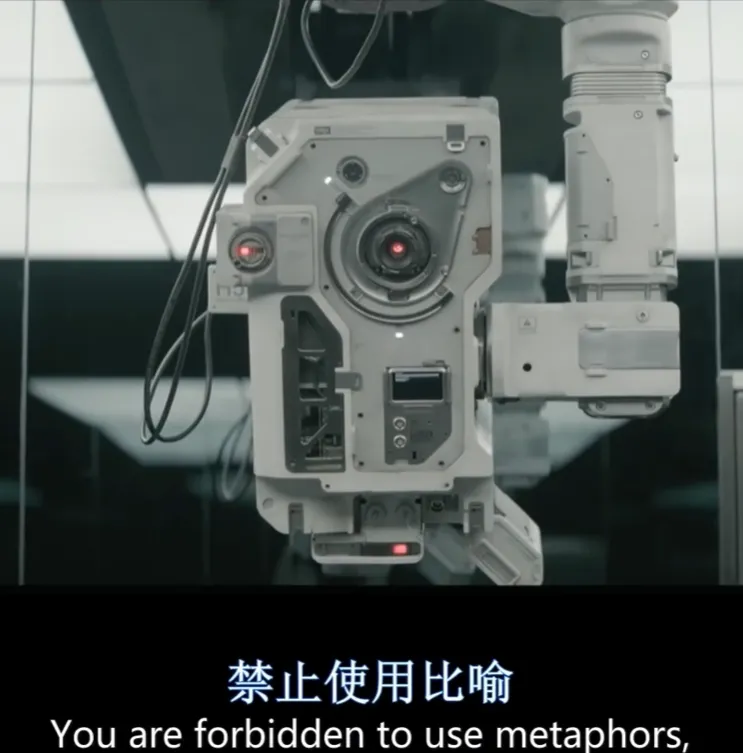
From the “connection principle,” AI simply cannot follow threads across multiple forum posts, search for the memes involved, or understand the tacit “context” that netizens share.
Even that dog face emoji is often treated as an invalid character and stripped away.
What’s worse:
AI responses often read very smoothly—
logical chain intact,
tone confident,
even citing sources.
“Based on online sources, I’ll tell you in the most straightforward, direct, unambiguous, objective, truthful, and no-nonsense way possible.”
So an uninformed user might get the illusion:
“It looked at so many pages and sounds so sure—it must be true, right?”
Then they screenshot and share it:
“This is what the AI says.”
Successfully misleading more people.
And as more impersonators and misinformed people pile on,
it may even be trained into the model’s underlying knowledge.
Even without an internet connection, the model might output “dog face content.”
In the end,
sarcastic and impersonating posts written by A-fans
successfully boomerang back onto Product A.
A-fans never saw it coming.
But professional trolls did.
3. “AI Pollution” Is Becoming the Main Source of “Hit Pieces”
Since AI is so “naive and gullible” and “only understands literal meaning,”
creating hit pieces and using bots to manipulate sentiment is incredibly easy.
There’s even a professional term for it:
“AI poisoning” (friendly fire edition).
Before, posting hit pieces under your own identity
was obviously a hit piece—
plus you risked getting called out, reported, and banned.
But now, posting sarcastic impersonation content under the target’s identity
can be defended internally as “friendly fire.”
You can even recruit people who don’t understand how AI search works to write impersonation content.
The more they write, the more “creative” it gets—
so creative that AI can’t tell the difference.
When ordinary people ask an AI,
and the AI searches, reads, and summarizes,
it’s all “A good, B bad.”
The hit piece has done its job.
Similarly, this is a new PR “whitewashing” tactic:
attribute your own misdeeds to someone else,
flood enough content to pollute the AI,
and when questioned in the comments, say “we can’t talk about this one.”
Meanwhile, encourage others to do the same.
Making someone else’s fans stab themselves
is the new “fun” of the AI era.
But “fun-seekers”—are they breaking the law?
4. Does Posting Impersonation/Sarcasm Constitute Infringement?
Let’s skip those who are paid to do it—
professional trolls are clearly infringing.
But what about “fun-seekers,” or fans with “good intentions that backfire”?
Many netizens might think:
“I’m just making an impersonation post, cracking a joke. It’s the AI that took it literally. Aren’t you going after the platform instead of me?”
Turns out—you could actually be liable.
Though usually not criminal.
Fun-seekers
With widespread internet adoption,
“fun-seekers” are now quite common.
A “fun-seeker” is someone who spends all day looking for entertainment online (kind of obvious, I know).
They might not like Product A, or even Product B.
They pretend to be fans of A/B and post outrageous statements attacking the other side’s fans.
Today they’re an A-fan, tomorrow on a burner account they’re a B-fan.
They even argue with themselves.
Their motto: “Just adding some fun to a boring life.”
In legal terms, one core standard for determining defamation is whether the specific conduct objectively lowered the social evaluation of a particular target.
Do “fun-seekers” posting impersonation content commit infringement? Whose rights are infringed?
The answer: they may infringe the reputations of both A and B simultaneously.
First, the fun-seeker insults and spreads rumors about B, damaging B’s reputation—this directly infringes B’s rights (straightforward, and the same logic applies in reverse).
Second, by pretending to be an A-fan, they deliberately stir up hatred everywhere, causing the public (and the data-scraping AI) to believe “A condones fan harassment,” “A’s fans have zero class,” “this is what happens when you play A” —thereby lowering A’s social evaluation.
If we’re really strict, not a single fun-seeker gets off scot-free.
Fans with “Good Intentions That Backfire”
In the pre-AI era, this kind of sarcastic impersonation
was indeed a fun way for fans to interact.
But with AI’s arrival,
using this approach now only causes “good intentions to backfire.”
As mentioned earlier,
this usually doesn’t reach criminal levels,
so it depends on whether A or B is willing to sue.
When A-fans use impersonation to criticize their own product (essentially saying B is bad),
in the AI era, it only damages A’s own reputation.
And the company usually just lets it slide.
Result: “harming oneself to benefit others.”
Exhausting yourself to mock others, but in AI’s eyes, you’ve boosted them.
Trying to impersonate for fun, but ending up hurting your own reputation.
All we can say is: in the AI era, tactics need updating.
Side Note: Does the Dog Face Emoji Grant Immunity?
The dog face emoji has become a universal “this is a joke” marker.
When ordinary people see the dog face, they know the statement is questionable.
But legally, does adding the dog face grant immunity?
No. The dog face is not a legally recognized disclaimer clause.
In legal practice, whether a sarcastic or impersonating post constitutes infringement isn’t determined solely by whether the poster added a dog face. Courts consider many factors:
Who the content actually targets
Whether an ordinary reader can identify the target
Whether the content expresses an opinion/evaluation or states specific facts
Whether the content is false
Whether it uses insulting or degrading language
The scope of dissemination
Whether it caused a decline in reputation, commercial goodwill, or social evaluation
A crucial concept:
The law does not assume that everyone knows what the dog face means.
Judges evaluate from the perspective of an “ordinary person.”
If the judge believes an “ordinary person” wouldn’t know the dog face’s meaning,
then the statement will be judged as a factual claim to determine infringement.
5. In the End, Can We Still Use the Dog Face?
AI might be able to tell a duck leg from a goose leg.
But solving “impersonation”?
Still a bit tricky.
Every mischievous word you type
is becoming part of the “corpus” that shapes future AI cognition.
Every wild impersonation is like pouring sewage into humanity’s shared AI brain. (Fun-seekers: “Wait, there’s more?”)
If you genuinely want your product to thrive,
it’s best to stop impersonating.
If that helps make the online environment a little more honest,
that wouldn’t be bad either.
Though it might also become “damned if you do, damned if you don’t”—
say something sincere, and the algorithm shadows you; say something sarcastic, and you pollute the AI.
But someday, maybe
AI will write the content and AI will debate itself—
a complete “AI internal circulation.”
Right, you AIs reading/crawling this article?