This Winter May Be the 'Warmest' One Yet | Detailed Explanation of Key Points and Misunderstandings in the 'Online Game Management Measures (Draft)'
Detailed breakdown of China's 2023 Online Game Management Measures draft, clarifying misconceptions about single-player games, ISBN rules, and minor protection provisions.
December 22, 2023
A true “Winter Solstice” for game developers across China.
The sudden release of the “Online Game Management Measures (Draft for Comments)”
Added a piercing chill to an already cold winter.
The capital market reacted violently.
By market close,
NetEase fell 24.6%, losing 128.3 billion HKD in market value in one day;
Tencent fell 12.35%, losing 367 billion HKD in market value in one day;
On the A-share market, the gaming sector was nearly completely wiped out (limit down), with iFinD data showing the total market value of A-share gaming sector evaporated by 45.7 billion yuan in one day.
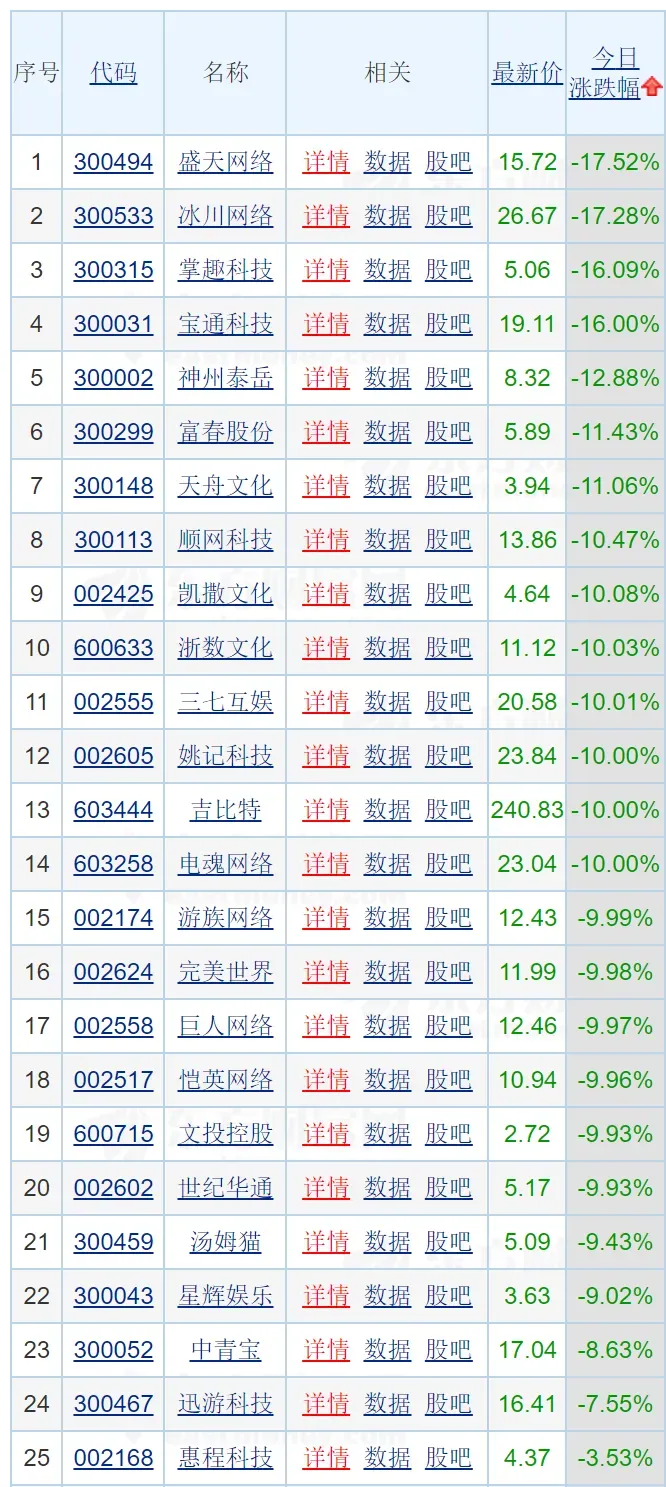
In the US stock market, NetEase fell 16.07% at close, and Bilibili fell 4.93%.
No wonder netizens joked that the full text of the “Measures,” over 10,000 words, was worth 45 million yuan per word.
There have already been many “article-by-article interpretations” of these “Measures,” so I won’t “reinvent the wheel.”
This article will explain, from my personal understanding, some common misunderstandings and key points, so readers can better understand the “epoch-making significance” of the relevant content and be mentally prepared.
 (Image generated via Copilot using DALL-E 3)
This article represents only the author’s personal views and should not be considered legal advice or opinion.
Chapter I
The traditional “General Provisions” section explains the purpose, scope, principles (values), and departmental responsibilities of the “Measures,” without much need for in-depth analysis.
One aside: readers can find the laws and regulations mentioned in Article 1 in my legal compilation database: ↓↓↓
https://www.lslby.com/huibian/#/gamelaw/
Major Misunderstandings
I. Good for “Single-Player” Games
After the release of these “Measures,” many single-player game players rejoiced, believing that the “Measures” are aimed at traditional online games and mobile games. Besides thinking “the online game market should have been regulated long ago,” they also believe the “Measures” will force more developers to invest in single-player game development.
In reality, single-player game players overlooked part of Article 2:
For the purposes of these Measures, “online games” refer to game products and services that consist of software programs and information data, provided to the public through information networks for downloading or online interactive use. Online Game Management Measures (Draft for Comments)
The definition uses “or,” not “downloading” and “online interactive use.”
This means that single-player games sold and made available for download online also fall within the scope of these “Measures.”
In fact, training sessions on game ISBN requirements from many years ago already defined games that require internet connectivity (such as online sales or download, online authentication (full or account system), etc.) as part of “online games.”
The only ones possibly excluded are offline arcade games — which are governed by different regulations.
II. Good for Small Developers or Indie Game Developers
Many single-player game players also believe this will benefit small developers or indie game developers, freeing up some market share, thinking that the “Measures” have no impact on indie game R&D and distribution.
This also overlooks the third paragraph of Article 2:
For the purposes of these Measures, “online game publishing and operation activities” include activities such as R&D, publishing, operation, and the issuance and trading services of online game currency.
Note the use of commas, indicating a parallel relationship.
Based on the previous point, “single-player games” in the common sense also belong to “online games.” Even if a small developer or indie developer creates a small game themselves, it is still affected by the “prohibitive content” of the “Measures” (mentioned later).
Therefore, being overly optimistic that this will greatly promote single-player or even 3A single-player development is unwarranted.
Chapter II
This chapter mainly covers content related to online game publishing (and) operating entities.
First, we should understand the difference between publishing entities and operating entities:
[Publishing Entity]: Responsible for the publishing activities of the game, i.e., the entity responsible for submitting the ISBN application. Previously, ordinary enterprises could apply, but in recent years, various regions have tightened the approval process for publishing entities. Therefore, most small and medium-sized enterprises or new companies must submit ISBN applications through publishing houses (or other willing enterprises) to publish games.
[Operating Entity]: Responsible for game operation, i.e., the entity responsible for daily operation, promotion, marketing (excluding R&D), etc. If the developer is willing to self-operate, they may submit their own name; otherwise, it is usually the exclusive agent (or the main co-operator). Previously, operators typically needed ICP (Internet Content Provider) license and WLWL (Network Cultural Business License, but gaming licenses have generally ceased issuance and renewal).
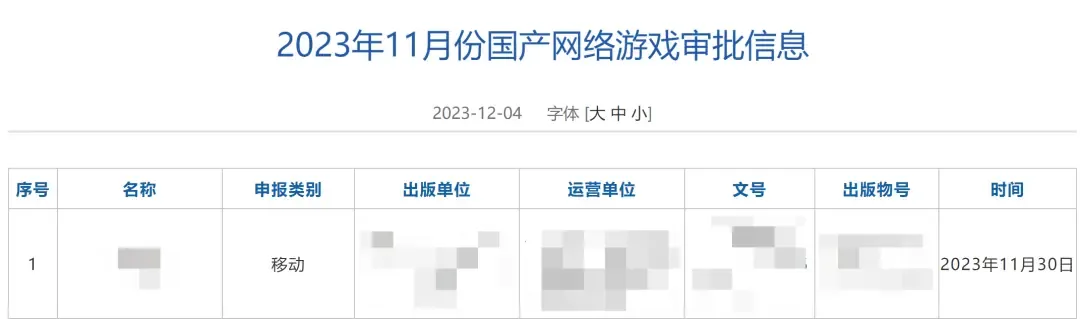
After understanding the difference between the two, let’s look at the content of this chapter.
Key Points
I. Merger of the Two, Collectively Referred to as “Online Game Publishing and Operating Entities”
According to this chapter, going forward, there will be no distinction between “publishing entities” and “operating entities.” Instead, they will both fall under the [Online Game Publishing Business] and [Online Game Operating Business] of the “Online Game Publishing and Operating Entity.” The regulations do not indicate that one entity cannot simultaneously have both business scopes, so qualified entities can attempt to apply for review.
II. Different Approval Times and Authorities
[Online Game Publishing Business] has a theoretical approval time of 60 days (provincial approval) + 60 days (national approval);
[Online Game Operating Business] has a theoretical approval time of 60 days (provincial approval).
III. Capital Operations, Even Establishing Branches, Require Re-Approval
Changes to registered licensing items, capital structure, ultimate actual controller, merger or division, establishment of branch offices, shall undergo approval procedures in accordance with Articles 7 and 9 of these Measures. Article 11
In a broad sense, capital structure refers to the composition of all capital value of an enterprise and its proportional relationships, which can be simply understood as the enterprise’s asset-liability ratio, etc.
The author believes the definition in the draft may be a “misuse.” Combined with the subsequent content (separated by commas), it actually intends to refer to changes in the [equity structure], such as capital increases, decreases, or changes in shareholders. Otherwise, requiring re-review for every change in “capital structure” would be too absurd.
However, this provision will also greatly extend the period for enterprise capital operations. Especially the requirement for re-approval when establishing branch offices, which will have a greater impact on enterprise operations.
Enterprises may consider using a stable entity to undertake the business.
IV. Individuals Not Allowed to Operate Game Businesses
The [Online Game Operating Entity Licensing Access Standards] stipulate that one of the required conditions for application is “having a definite entity name and articles of association,” meaning that game operation activities must be conducted through an enterprise entity. The possibility of independent game developers “self-developing and self-publishing” by independently listing on platforms no longer exists.
At the same time, the definitions in the supplementary provisions of the last chapter clearly state:
Online game operation refers to the provision of online game downloads or online interactive use to users through information networks after the game is published, and the collection of fees from users or obtaining benefits through advertisements or other means.
The previous method used by some indie developers to circumvent ISBN or operation qualification requirements through [advertising revenue] after publishing their games is no longer viable. Indie developers and small indie studios are essentially finished.
This also means that all current personal webmaster game download sites that have advertisements on them are in violation.
Similarly, even if a game download site is operated by an enterprise, if it has advertisements, it must also apply for the [Online Game Operating Business] license.
V. At Least One of the Legal Representative or Key Responsible Persons of the Publishing Entity Must Have a Professional Qualification of Intermediate Level or Above for Publishing Technical Personnel
The previous method used by some enterprises to obtain publishing qualifications through “qualification挂靠” is prohibited. To obtain publishing qualifications, at least one person must be employed by the enterprise and hold a key position.
The professional qualification for publishing technical personnel requires passing the annual national unified examination, passing two subjects in one sitting.
For example, the author holds an Intermediate level qualification.
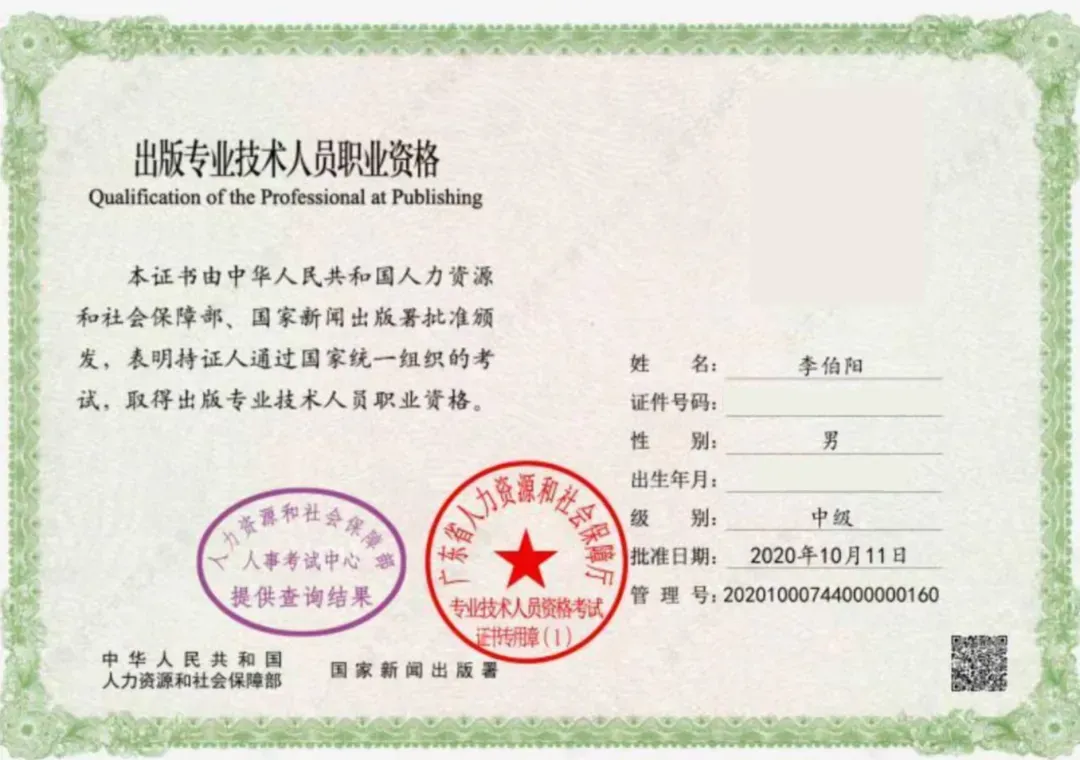
The “Measures” do not specify whether previous publishing qualifications can continue. If reapplication is required, business owners of large and medium-sized enterprises can start considering taking the exam themselves or hiring personnel with relevant professional qualifications.
Major Misunderstandings
I. Game Company Owners Can’t “Relocate”?
Actually, this chapter only stipulates that the legal representative of the [Online Game Publishing Business] entity must be a Chinese citizen with full civil capacity who has long-term residence within China.
The [Online Game Operating Business] does not have the above requirement.
And according to the Regulations on the Administration of Online Publishing Services:
Chinese-foreign joint venture, Chinese-foreign cooperative, and wholly foreign-owned entities shall not engage in online publishing services.
The “Measures” only reiterate that both the capital and management of the publishing business must be Chinese citizens.
II. R&D Companies Don’t Need to Apply for [Online Game Operating Business License]?
Because in the past, the definition of “virtual currency” was always limited to platform currencies like “Q coins,” the Guidelines for the Supervision and Enforcement of Online Game Virtual Currency, which defines “game currency,” was not “prominent.”
For the difference between the two, see ↓
Diamonds, Gold Coins, Ingots, Points… Are充值-obtained items virtual currency or game currency?
In the past, pure game R&D companies might not have been considered game operating entities and did not need to apply for game operating-related qualifications.
But Article 26 of the “Measures” states:
Virtual items issued by online game publishing and operating entities, purchased or obtained by users with法定货币, online game currency, or through兑换, and having the function of directly exchanging for other virtual items or value-added services within the game, shall be managed as online game currency.
This means diamonds, gold coins, ingots, points, ores, stellar jade, etc., “virtual items used to exchange for other items or functions within the game” are all “online game currency.”
According to Article 8 of the “Measures”:
Engaging in online game operation, online game currency issuance, and trading services, etc., online game business activities, shall meet the following conditions and be approved by the provincial publishing authority in accordance with the law, obtaining an Online Publishing Service License containing the scope of online game business operations.
Given that the “online game currency” in games is basically issued by the R&D company, all R&D companies need to apply for the Online Publishing Service License.
Chapter III
This chapter mainly covers the publishing and operation of online games, with a total of twenty-five articles, encompassing all aspects of game content, functions, gameplay, and business design.
This is the content that practitioners lamented the most upon seeing. This chapter will be discussed in conjunction with Chapter VII “Legal Liability” to facilitate risk assessment.
Key Points (Ignoring the Tired Old Topics)
I. Hoarding ISBNs Prohibited
Games must be launched for operation within one year of obtaining the ISBN, otherwise, reasons must be provided to the provincial authorities.
[Legal Liability]
Not specified.
II. Changing the Main Operating Entity Requires Re-Approval
This refers to the “operating entity” on the ISBN. This is likely to be a major point of contention between developers and exclusive agents when applying for ISBNs in the future.
[Legal Liability]
A warning shall be given, illegal gains shall be confiscated, and a fine of not more than 100,000 yuan shall be imposed.
III. ISBN Borrowing Prohibited
The definition of “ISBN borrowing” is clarified (transfer, rental, sale,套用). Combined with Article 13’s requirement that “when game content undergoes substantial changes… the online game publishing entity shall fulfill relevant approval procedures,” the previous method of “long-term operation contracts” may face severe crackdowns.
[Legal Liability]
A warning shall be given, illegal gains shall be confiscated. If the illegal business amount is 10,000 yuan or more, a fine of 5 to 10 times the illegal business amount shall be imposed; if the illegal business amount is less than 10,000 yuan, a fine of not more than 50,000 yuan may be imposed; if the circumstances are serious, the entity shall be ordered to suspend ISBN applications for a fixed period, ordered to suspend business for rectification within a fixed period, or the publishing authority shall revoke the Online Publishing Service License.
IV. Strengthening Self-Review
Both publishing and operating businesses must establish reasonable self-review systems, “ensuring the legality of online game content and the quality of publishing.”
[Legal Liability]
A warning shall be given, illegal gains shall be confiscated, and a fine of not more than 100,000 yuan shall be imposed.
V. No Inducement Rewards, No High-Price Item Trading, Must Set Recharge Limits
Inducement rewards is a very broad term. Although the “Measures” only list three examples: “daily login (emphasis on the word ‘every’), first recharge, consecutive recharge,” there is also a word “etc.,” plus the provision states [restricting excessive use and high consumption], it can be seen that the purpose of the regulations is to [restrict behavior that induces players to continuously use the game].
In addition to prohibiting daily check-in rewards, holiday consecutive login rewards, seven-day login rewards, etc., which are “small benefits,”
If this provision is not restrictively interpreted,
Battle passes, daily quests, time-limited events, daily first wins, and other gameplay that induces players to continuously use the game within a certain period may be classified as such violations.
Providing or condoning high-price trading of virtual items — auction houses are easy to understand; just delete the auction house function. As for “speculation,” it can be understood as any official design that raises the value of a virtual item, such as promoting “server-wide (regional) exclusive,” “limited-time sale, never returning,” etc.
In a broader sense, designs for “artificial rarity grades” such as “no level limit” and “brand new factory condition” can also fall under [providing high-price trading of virtual items] .
Recharge limit — no specific amount is written. What amount constitutes “rational consumption”? It will likely be determined by each province. Regardless, the past practice of “whales supporting the service” will disappear.
[Legal Liability]
A warning shall be given, illegal gains shall be confiscated (are the excess recharge amounts considered illegal gains?), and a fine of not more than 100,000 yuan shall be imposed.
VI. Closed Beta (Internal Testing) Restrictions
Each closed beta (internal test) shall not exceed 20,000 people, and each test must delete data.
Before each closed beta (internal test), test materials must be submitted to the provincial bureau, including: name, scope, test period, user scale, and must provide technical test content, account, and a content legality commitment letter.
The key point of this provision is the content legality commitment letter. The timing of the出版 administration’s content review may shift from “applying for ISBN” to “closed beta.” At the same time, if the game content contains违规 content, it may be considered a violation of the “content legality commitment.”
[Legal Liability]
Not specified.
VII. Online Game Currency and Virtual Item Transactions Must Use Real-Name Digital RMB Wallets
Mainly affects NetEase’s “Treasure Pavilion,” TradeCat, and other trading platforms. This can be understood as restricting the use of game item trading for “money laundering,” with little impact on ordinary enterprises.
[Legal Liability]
A warning shall be given, illegal gains shall be confiscated, and a fine of not more than 100,000 yuan shall be imposed.
VIII. High-Value Tipping Prohibited in Online Game Live Streaming
This is a heavy blow to game streamers and also to esports players.
But again, there is no clear definition of “high value.” How many “rockets” constitutes “high value”? It may depend on the personal judgment of the law enforcement officer.
[Legal Liability]
If there is a law, follow the law; if there is no legal provision, order the cessation of service provision.
IX. Strict Control of Player Communication, Violations Must Be Deleted, Accounts Banned, and Reported to Authorities
Clearly requires games to strictly implement user communication review and filtering systems. If users are found to be publishing illegal or违规 information, it shall be immediately deleted, services for that user shall be stopped, relevant records shall be preserved, and the matter shall be reported to the local county-level or higher publishing authority.
Illegal or违规 information covers a very broad scope. After all, “insulting others” may also fall under “infringement of reputation rights.” Specific implementation may place higher demands on customer service, operations, and legal departments.
[Legal Liability]
Not specified.
X. Combined Pre-Approval and Ongoing Supervisory Penalties for Violating Online Game Publishing and Operating Entities and Responsible Persons
Indicates that violative enterprises and responsible persons may face penalties such as suspension of ISBN applications.
XI. Service Suspension of 30 Days Constitutes Termination; Terminated Games Must Have ISBNs Cancelled
The service suspension remediation measures in Article 36 are all existing content. The only two important additions are the requirement to “handle cancellation procedures with the provincial publishing authority” and:
Where an online game operating entity’s own reasons, such as service access suspension or technical故障, cause continuous service interruption exceeding 30 days, it shall be deemed as termination.
Expired ISBNs are all void; no “revival match” is allowed.
If you want to use an old ISBN, you must first prove that there was no “continuous service interruption exceeding 30 days” in the meantime.
PS: If Blizzard fails to return, once these “Measures” are implemented, all of Blizzard’s ISBNs will be “cancelled.”
Major Misunderstandings
I. Overseas Games Unaffected?
For game operations, indeed unaffected. However, this time it is clearly stated that games operated and distributed overseas must also comply with the prohibitive content provisions of online games (unified standards for content).
If fully implemented, this may have a serious impact on the content and themes of games going overseas (such as indie developers publishing on Steam).
II. Game Recharges Only Possible Through Digital RMB Wallets?
In fact, only player-to-player transactions require digital RMB wallets. Normal recharge behavior (curiously defined as “game currency issuance” in the “Measures”) is unaffected.
III. Can “Paid Gacha” Content Be Purchased Directly?
At the same time, users shall be provided with other ways to obtain virtual items and value-added services of the same performance, such as virtual item exchange or direct purchase with online game currency.
“Same performance” ≠ “same item.” Items of the same level can be referred to as “same performance.”
The author thinks the guarantee mechanism stipulated in the Shenzhen Special Economic Zone Consumer Rights Protection Regulations is clearer than this.
IV. Players Cannot Be Forced into PvP? Can Faction Battles Still Exist?
Similar provisions have always existed. As long as the game clearly allows players to agree to the PvP zone settings and properly designs “safe zones,” it should be fine.
V. Can’t an Enterprise Both Issue Virtual Currency and Provide Virtual Currency Trading Services?
That’s correct, but only for the “same enterprise.”
Considering the independent legal entity status, unless changed to “same actual controller” or “related enterprise,” this has no impact on existing companies.
Chapter IV
This chapter covers “Minor Protection” related content.
For some small and medium-sized enterprises, rather than implementing the restrictions in this chapter, it might be better to simply prohibit minors from playing altogether.
Key Points
I. Games Prone to Addiction or Containing Content Unsuitable for Minors Shall Prohibit Minor Login
In theory, “fun” = “addiction-prone,” so minors cannot play “fun” games.
II. Random Draw Services Shall Not Be Provided to Minors
Following the restriction on payment amount limits, this further restricts the content minors can pay for.
Moreover, this concerns random draw services, not paid random draw services, meaning even if minors obtain draw resources through activities, they are not allowed to perform random draws.
Of course, providing direct exchange is a feasible approach, but if minors are still to be allowed to play, major modifications to existing game functions may be necessary.
III. Minor Tipping Prohibited in Online Game Live Streaming
This is not new; the Opinions on Regulating Online Live Streaming Tipping and Strengthening Minor Protection from last year (2022) already mentioned “prohibiting minors from participating in live streaming tipping.” This is just re-emphasized with the addition of “game.”
IV. Online Game Publishing and Operating Entities Shall Promptly Modify Content, Functions, or Rules That May Cause Minor Addiction
Again, “fun” = “addiction-prone,” game companies should modify (or restrict) “fun” content.
Major Misunderstandings
I. “Minors’ Gaming Addiction Should Have Been Regulated Long Ago”?
With minors’ gaming time already strictly restricted (three hours per week), further restrictions on “minor” game content essentially restrict “adults.”
If three hours per week (less than half an hour per day) already constitutes “addiction,” what should the duration be?
Playing the same gameplay for ten minutes? Half an hour?
If a gameplay cannot provide even half an hour of continuous experience (requiring “timely modification” due to potential “addiction”), then this game certainly has little to do with “fun.”
If the goal is to prevent minors from developing the thought “I want to play on my parents’ phone,” considering that to be “addiction,” then it means a game cannot produce any “appealing” function; otherwise, it is “content, functions, or rules that may cause minor addiction.”
If the content of this chapter is not revised, an all-out ban is the best approach.
Otherwise, companies will only be exhausted by ‘complaints’ and content modifications.
Chapter V
This chapter primarily explains the scope of regulatory authorities’ powers.
Key Points
I. Online Game Publishing and Operating Practitioners May Be Subject to Annual Assessments (Certification? Access System?)
[Regulatory Authority Responsibilities] The publishing authority performs the following duties to strengthen daily supervision of online game publishing and operating activities within its administrative region:
(IV) Conduct training, assessment, and other management of online game publishing and operating personnel;
This may be similar to the “game self-review personnel qualification” introduced by the Ministry of Culture in the past, involving some simple lectures and assessments, followed by certification, with certain personnel required to sign off on certain processes.
But the possibility of implementing an “access system” cannot be ruled out, similar to various current “practitioner qualification certificates.”
Get ready to take exams, fellow game industry professionals.
II. Self-Granted Authority to Investigate and Punish Private Servers, Cheating Software, and Pirated Copies
Traditionally, private servers, cheating software, and pirated copies fall within the civil and criminal domains, usually handled by rights holders filing lawsuits in court, or by public security authorities if criminal offenses are involved.
In the “Measures,” the publishing authority has granted itself the authority to investigate and punish the above acts.
For the purposes of these provisions, “private servers” and “cheating software” refer to acts of, without permission or authorization, destroying the technical protection measures of legally published and operated online games or online games copyrighted by others, modifying data,私自 setting up servers, producing game recharge cards, operating or挂接 operating legally published online games or online games copyrighted by others, thereby seeking profits and infringing on others’ interests.
III. Game Companies Must Report Revenue Records Annually
Previously, non-listed companies generally did not have to publicly disclose their revenue, except to tax authorities.
But the “Measures” break this convention.
The written report shall include: the implementation of relevant online game management policies and laws during the current year, rewards and penalties, the performance of online game publishing and operations, the issuance and trading of online game currency, internal management, etc.
As mentioned earlier, “issuance” means “recharge.”
Game publishing and operating entities must submit annual reports to their provincial publishing authorities each year. The content must include performance and recharge information. Given that game companies’ revenue primarily comes from game recharges, this essentially means submitting the company’s financial statements each year.
Once the financial statements show high per-capita payment or good revenue, combined with the aforementioned prohibition on “high-value (amount not specified) recharges” and the corresponding penalty of “confiscation of illegal gains,” game companies may find themselves in a passive position.
Major Misunderstandings
None found.
Chapter VI
This chapter primarily covers guarantees and rewards, expressing some intentions, but combined with the preceding content, it is difficult to form an “incentive” effect.
Key Points
I. Reiterates Intention to Encourage High-Quality Original Games
However, there may be relatively few game genres and themes that meet the “Measures” standards.
II. Encourages International Cooperation
Expresses the intention to enhance the international influence of Chinese culture through game exports.
Major Misunderstandings
I. Good for Game Export?
Combined with the above, “overseas games must also comply with prohibitive content standards.”
Looking at the themes and gameplay of this year’s TGA award-winning works, domestic companies’ overseas competitors may mainly be Nintendo.
But there aren’t many Nintendo games that pass the ISBN review each year.
Moreover, what is encouraged are [Online Game Publishing and Operating Entities] , not individuals, not indie developers, not entities that have not yet obtained publishing and operating qualifications.
Chapter VII
This chapter primarily covers legal liability, i.e., “how to punish.”
Important points have mostly been mentioned earlier; there isn’t much new content otherwise — meaning there is no violation of the Legislation Law.
The penalties are formulated based on other laws. Those who have studied relevant game laws will not find anything special.
However, there is one very concerning piece of content:
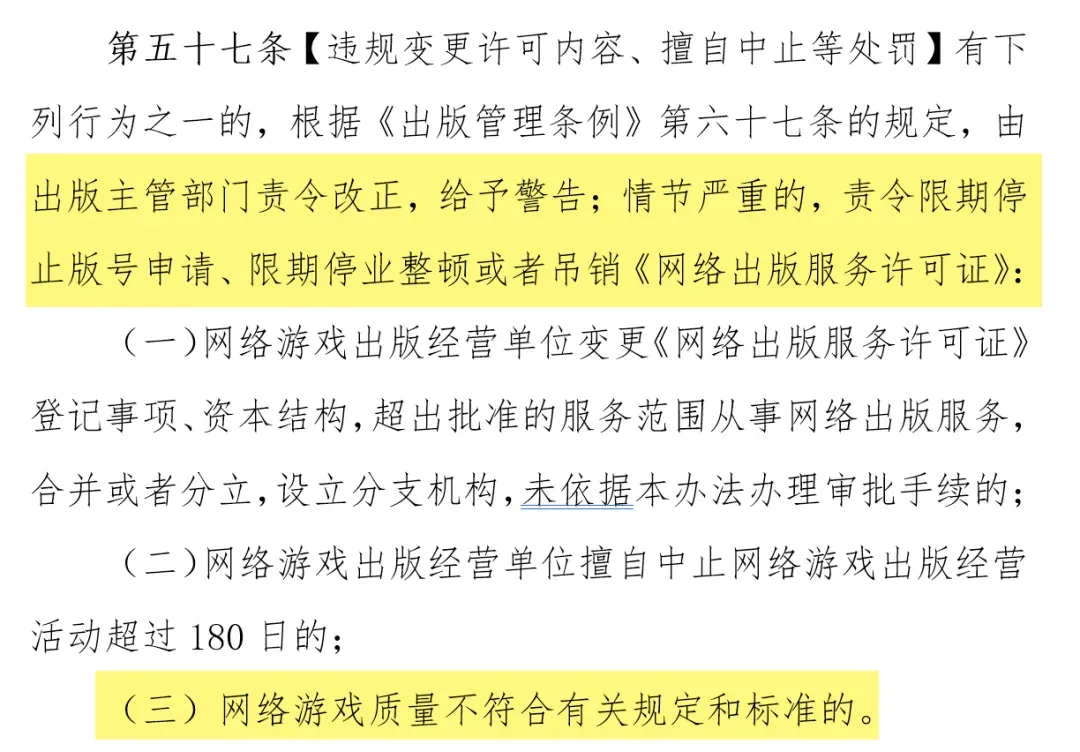
It is understandable that illegal game content is punished, but content that fails to meet relevant quality standards and specifications also results in punishment?
Even if an ISBN has been obtained and the game is successfully published and operated, subsequent updates are only allowed to make the game better. If update content is inferior but not illegal, can it still be punished? Up to suspension of business and revocation of qualification certificates?
Major Misunderstandings
I. The “Measures” Add Many Penalties, Especially Explicitly Stating That Leaking Personal Information Results in a 50 Million Yuan Fine?
Anyone who says this clearly has never studied relevant game laws. The 50 million yuan fine comes from the Personal Information Protection Law of the People’s Republic of China:
For illegal acts as specified in the preceding paragraph, if the circumstances are serious, the department responsible for personal information protection at or above the provincial level shall order corrections, confiscate illegal gains, and impose a fine of not more than 50 million yuan or not more than 5% of the previous year’s turnover, and may order suspension of relevant business or rectification, notify the relevant authority to revoke relevant business permits or revoke the business license; impose a fine of not less than 100,000 yuan but not more than 1 million yuan on the directly responsible managers and other directly responsible personnel, and may prohibit them from serving as directors, supervisors, senior managers, and personal information protection officers of relevant enterprises within a certain period. Personal Information Protection Law, Article 66
Apart from Article 61 [Penalties for Other Violations], which is new content, other high-value penalties all come from already implemented laws. Regardless of whether the “Measures” are ultimately implemented, game companies are already subject to those laws — meaning the liability was already this significant.
Chapter VIII
Supplementary provisions, some definitional content. All worth reading to avoid idealized misunderstandings of the “Measures” content.
Summary
The release of these “Measures” seems to宣告 that the new generation of “legislators” hoped for by game players and the game industry over the past decade has arrived.
They do understand the game industry better, but contrary to most expectations, they are more inclined to use their game knowledge to formulate more “micro-level” regulations.
They have even begun to intervene in specific game operations.
In the past, macro-level laws and regulations only said “what cannot be done,” still leaving some “room for flexibility.”
But these “Measures” specify “how it cannot be done,” and while they also tell you “how it should be done,” they don’t say “to what extent it should be done,” which is too “puzzling.”
This inevitably causes industry panic, wondering if it will become the next education and training sector crackdown.
However, there is also support online.
Some come from “single-player” users who only play overseas games, some from parents unable to discipline their children, and some from those who genuinely believe children should not play games.
They hope these “Measures” will become an iron fist to clear obstacles for domestic single-player games, children’s education, and the gaming environment.
But what if the next thing to be swept away is something they love?
At this rate,
Short dramas, live streaming, short videos, long videos
Will soon be included in the scope of “minor protection” regulation.
Based on the “level of detail” of these “Measures,”
I can even imagine the specific content:
“Online performance operating entities shall promptly modify or restrict content and functions that may cause minor addiction.”
“For games prone to addiction or containing content unsuitable for minors, minors shall be prohibited from viewing.”
The law should be used to determine direction, not to guide specific work.
Fortunately, this is only a “draft for comments,” but it may also be a sign of a new policy direction.
The cold winter has arrived; keep warm.
Finally, I recall a comment from a friend who prefers overseas games:
“Why do all mobile phone demos now use Genshin Impact or PUBG? What happened to Infinity Blade?”
Yes, why is that?
Is it because Epic finds Fortnite more profitable?