While Waiting for Black Myth: Wukong, Why Not Check Out Some Related Legal Knowledge
Covers IP and copyright issues surrounding Journey to the West adaptations, trademark protection for Black Myth: Wukong, the legality of using real-world scanned cultural relics in games, and the risks of free-riding on the game's popularity.
There’s about a week left until the global simultaneous release of Black Myth: Wukong (August 20).
I believe many readers have already pre-ordered and are anxiously waiting.
But the author hasn’t bought it yet.
Journey to the West has always been a hot IP for domestic games.
After the release of Black Myth: Wukong, it’s believed to once again lead a wave of Journey to the West adaptations.
However, some legal knowledge surrounding Journey to the West and even Black Myth: Wukong
may also be of interest to everyone.
*This article reflects only the author’s personal views and does not constitute any legal advice or legal opinion.
I. Copyright Issues Related to Journey to the West
Using and Adapting the Journey to the West IP
Black Myth: Wukong is adapted from Journey to the West.
(Due to the connection with Dou Zhan Shen, some also believe it is adapted from A Biography of Wukong.)
As a classic IP, the recognized author Wu承恩 died in 1582. Therefore, the copyright protection period for Journey to the West has long since expired. The IP of Journey to the West has fallen into the public domain.
This means that anyone can use and adapt the Journey to the West IP to create games, movies, or other forms of works without constituting copyright infringement.
Article 23: For a work of a natural person, the protection period of the right of publication and the rights provided in items (5) to (17) of Article 10(1) of this Law shall be the lifetime of the author and fifty years after the author’s death, expiring on December 31 of the fiftieth year after the author’s death; for a collaborative work, it shall expire on December 31 of the fiftieth year after the death of the last surviving author.
*Note: This is the famous “lifetime plus fifty years.” Copyright Law
However, adaptation is not arbitrary alteration.
What falls into the public domain is only the property rights portion of copyright; the rights of publication, attribution, modification, and the right to integrity of the work have a perpetual protection period.
The right to integrity of the work means the right to protect the work from distortion and mutilation. Although anyone can freely use and adapt works that have entered the public domain, adaptation does not mean arbitrary modification. Adaptors must still respect the basic content and spiritual essence of the original work.
As early as 2009, a National People’s Congress representative had already called for “protecting the four great classics and strictly preventing spoofing.”
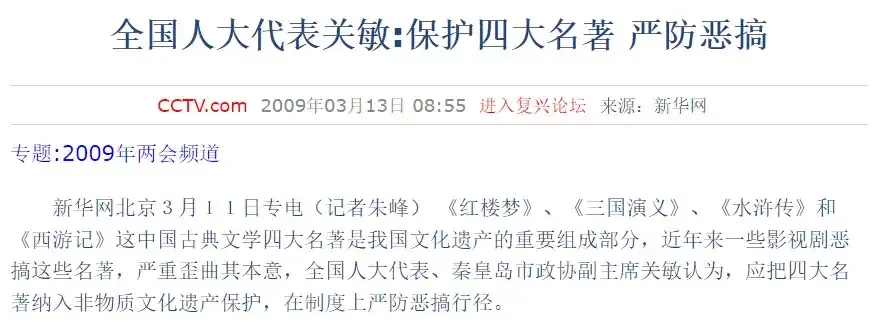
However, the right to integrity of a work belongs to the heirs of the author, and Wu承恩’s heirs have long been untraceable.
Furthermore, China has not yet established any relevant institution or legislation to regulate the adaptation of classical literary works. Therefore, what constitutes “proper” adaptation may currently have no clear standards.
However, based on what is currently known, changing the protagonist to a female is not acceptable.
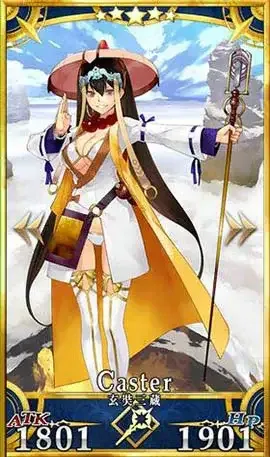
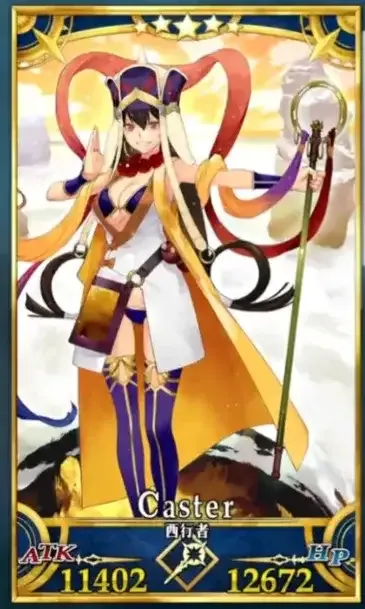 (In the Chinese server version of FGO, Xuanzang Sanzang was renamed to “Western Traveler”)
To pass game approval smoothly, it’s best to maintain the original work’s basic settings.
II. Intellectual Property Issues Related to Black Myth: Wukong
Copyright of Black Myth: Wukong
Since Journey to the West no longer has copyright property protection, can derivative works “borrow” from each other, since they are all based on Journey to the West?
For example:
Develop a mobile game, copy the storyline of Black Myth: Wukong, change it to your own art assets, and claim that the new game is made from the copyright-free Journey to the West.
Is this feasible?
This may seem like a “smart” and “common” approach, since Journey to the West is indeed a copyright-free classic work, and “ideas often coincide. ”
However, although Journey to the West itself is in the public domain, Black Myth: Wukong, as an adapted game work, has its unique creative elements, character designs, storyline, system architecture, etc., which are protected by copyright law and need a new “lifetime plus fifty years” calculation.
Article 13: The copyright in works created through adaptation, translation, annotation, or arrangement of pre-existing works shall be enjoyed by the adapter, translator, annotator, or arranger, provided that the exercise of such copyright does not infringe the copyright of the original work. Copyright Law
Simply put, merely changing the art style is not enough to avoid infringement risk. If the new game’s core gameplay, key plot, special systems, etc., are highly similar to Black Myth: Wukong, they are likely to be deemed substantially similar, constituting infringement.
Once sued, even claiming to be based on Journey to the West would not be a valid defense.
Trademark Rights of Black Myth: Wukong
If a new game won’t work, let’s try a different approach. Since Journey to the West content is not protected, nor directly protected by trademark law, can we rename shell apps to White Myth: Zhu Bajie, Red Myth: Nezha, Gold Myth: Golden Horn King, etc.?
The trademark protection status of Black Myth: Wukong was discussed previously. Interested readers can visit the following link:
First, shell apps violate the “one game approval number, one name” regulation. In the current enforcement environment, this may be considered “illegal publication” or “illegal operation,” leading to penalties from relevant authorities.
Second, even if the name of the shell app does not infringe upon the trademark rights of Black Myth: Wukong, there may still be “free-riding” behavior, constituting unfair competition.
Although small-scale antics might have been ignored by Game Science in the past—for instance, Black Cotton: Zhu Bajie has survived on Steam for over a year:
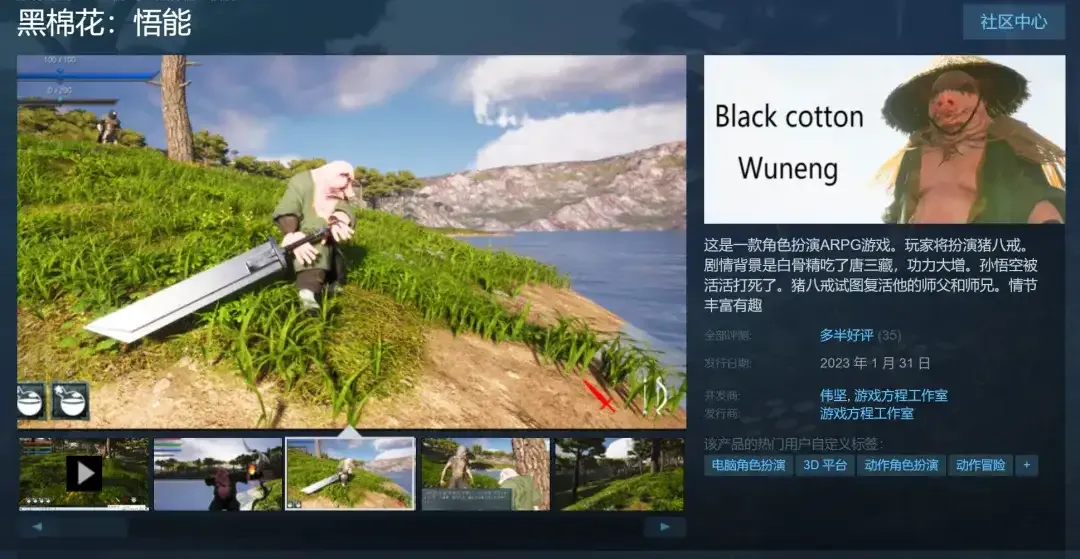
But after the game’s release, especially in the wake of Black Myth: Wukong’s massive popularity, obvious “riding the trend” behaviors such as “temporary name changes” or “names unrelated to game content” may come under increased scrutiny.
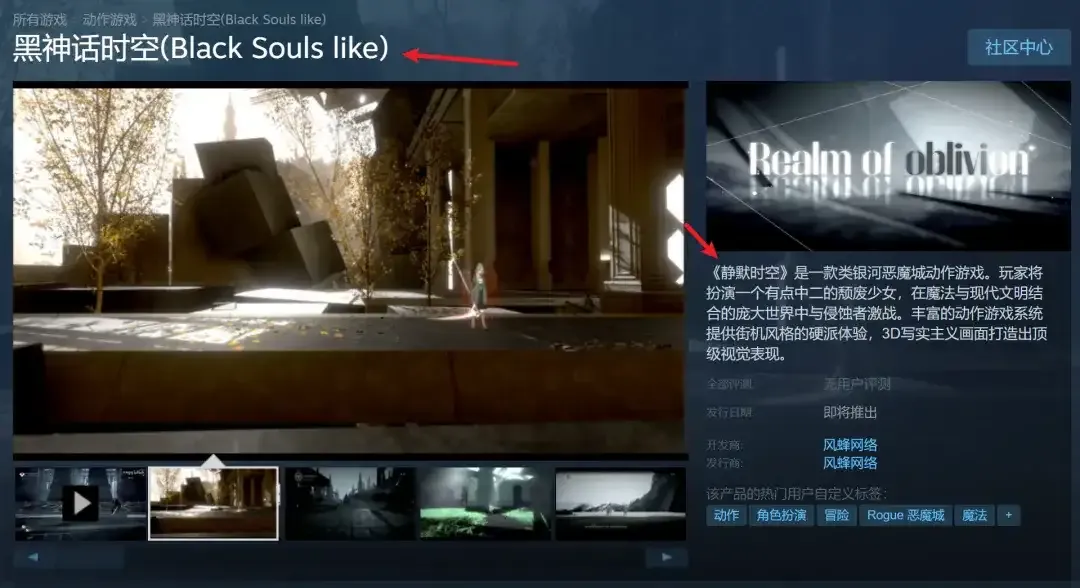 For example, a game that forgot to even change its description after renaming.
III. Use of Shanxi Cultural Tourism Resources
Black Myth: Wukong contains a large number of real-world scanned models, recreating some of Shanxi’s famous ancient architecture and Buddha sculptures.
The Shanxi Department of Culture and Tourism even released a video comparing game footage with real-life footage.
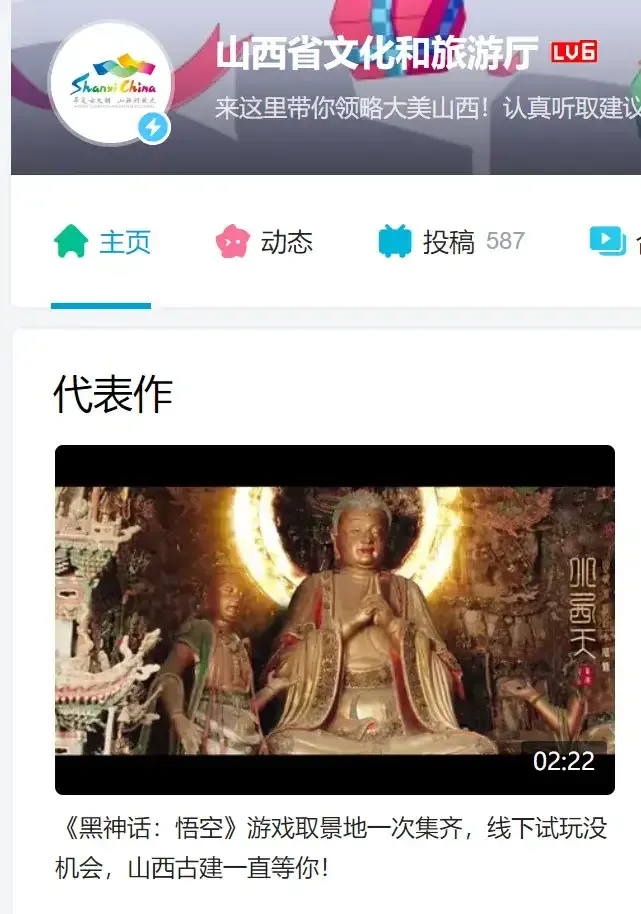
Since those ancient buildings and Buddha sculptures are cultural relics, they have naturally passed the “lifetime plus fifty years” restriction and are “public domain works.”
Black Myth: Wukong, due to being “sufficiently accurate,” considering the current level of technology, is more like a direct 1:1 real-world scan with automatic modeling (correct me if I’m wrong), so it can be considered “mechanical reproduction,” meaning it lacks its own “originality.”
It is known that works protected by the Copyright Law need to be “intellectual achievements in the literary, artistic, and scientific fields that are original and can be expressed in a certain form.”
So, if one day Black Myth: Wukong’s art resources are unpacked (setting aside the legality of unpacking for now), could the relevant building and Buddha models be directly used without modification, and not infringe on Game Science’s copyright?
Under current legal provisions, I believe this is possible.
However, this applies only to copyright.
With current 3D fully automatic scanning modeling technology, single building models generated through real-world scanning (considering only individual models, not combinations of models into scenes) would, in my personal opinion, be difficult to recognize as having copyright.
This is because the production process of such models mainly relies on the scanner mechanically recording the building’s appearance, then specialized software automatically generating 1:1 digital models. In this case, human intervention and creative input are extremely limited. The human element is limited to selecting scanning equipment and software, and deciding on scan timing and basic settings.
Copyright law typically requires a certain degree of originality in works, and purely mechanical reproduction or automatically generated processes often do not meet this requirement. Such models are essentially objective records of real buildings, not original designs.
Therefore, these models may not have protectable copyright.
However (and here’s the “however” again)!
In my opinion, using another person’s real-world scanned models may constitute unfair competition.
If such models are used in one’s own game, the user and Game Science are in a competitive relationship. Using these models without permission for commercial activities may be considered “free-riding” behavior. Especially when the model creator (Game Science) has invested significant resources in generating these models, the user’s behavior may be deemed unfair exploitation of another’s labor, constituting “harming the legitimate rights and interests of other operators” and “violating business ethics.”
Article 1: If an operator disrupts market competition order, harms the legitimate rights and interests of other operators or consumers, and the situation falls outside the provisions of Chapter 2 of the Anti-Unfair Competition Law and the Patent Law, Trademark Law, Copyright Law, etc., the people’s court may apply Article 2 of the Anti-Unfair Competition Law to determine the matter.
Article 3: Behavioral norms generally followed and recognized in a specific commercial field may be recognized by the people’s court as “business ethics” under Article 2 of the Anti-Unfair Competition Law. Interpretation of the Supreme People’s Court on Several Issues Concerning the Application of the Anti-Unfair Competition Law of the People’s Republic of China
Therefore, it may also constitute an infringing act.
IV. Conclusion
Black Myth: Wukong, as perhaps the most anticipated domestic 3A masterpiece this year, has absolutely maximum traffic. I believe many game industry practitioners are eager to “get a piece of the pie.”
But true innovation and success should come from respect for original content and improvement of one’s own capabilities. Rather than taking risks with others’ labor, it is better to invest resources in developing your own unique game content and technology. Don’t let short-term gains blind you. If you have doubts about certain practices, the best approach is to seek professional legal advice.
Only then can we steadily move forward in the fiercely competitive game market and create truly outstanding original works of our own.