Case Study on Video Games Constituting Copyright Infringement Crimes | 'Game Plagiarism' May Also Violate Criminal Law
Detailed case analysis of criminal copyright infringement in China's gaming industry, including conviction thresholds, source code similarity standards, and liability for game operators.
Foreword
With the rapid development of the video game industry, game conception and design have entered a field full of creativity and competition. Countless game developers diligently devote themselves to realizing creative ideas, transforming them into exciting levels, complete systems, and vivid artistic visuals.
However, there has always been an unavoidable problem: innovation in gameplay is not infinite, and isolated ideas are difficult to make foolproof. Therefore, there is an implicit understanding in the gaming industry: gameplay is not specifically protected.
The core underlying rules may be the same, but on top of that, each work can be filled with its own unique ideas and creative expressions. As long as the specific presentation differs, it is generally not considered an infringement of intellectual property. For example, the highly anticipated Baldur’s Gate 3 recently exploded in the market, with its core rules derived from the fifth edition of the tabletop role-playing game Dungeons & Dragons (D&D). In fact, D&D, as the ancestor of RPG (role-playing) games, has brought a series of basic designs to RPG games, including storytelling, attribute settings, skill systems, and quest setups, and can be considered the theoretical birthplace of all RPG games.
However, as development costs continue to rise and the temptation of money grows, some game developers may cross the red line of “reasonable use of intellectual property,” “borrowing” or “plagiarizing” others’ ideas into their own works, stepping into the abyss of crime.
In this article, we will delve into recent cases in the domestic video game industry that constitute copyright infringement. Apart from the well-known criminal acts of “cheating software” and “private servers,” we will focus on analyzing what kind of “plagiarism” and to what extent “borrowing” may be suspected of violating criminal law.
Through detailed case studies, we can clearly delineate the boundary between civil and criminal “copyright infringement” and stop in time at the edge of crime.
I. Differences Between Civil and Criminal Liability for Copyright Infringement
For practitioners in the domestic gaming industry, the concept of “copyright infringement” may be more concentrated on civil litigation compensation. After all, we often hear about which company infringed on another company’s game and was ordered to pay millions of yuan in damages.
But few people may realize or understand that copyright infringement can also constitute a crime.
In the civil领域, acts of copyright infringement are detailed in Chapter 5 of the Copyright Law, covering a series of acts without the permission of the copyright owner, including but not limited to distribution, reproduction, adaptation, distortion,篡改, and plagiarism. Game plagiarism, such as art, UI, IP, and copywriting, typically involves “reproduction” and “adaptation.”
In the criminal领域, Section 7 of the Criminal Law, “Crimes of Infringing Intellectual Property Rights,” stipulates the constitutive elements of the “crime of copyright infringement”:
Article 217: [Crime of Copyright Infringement] For the purpose of profit, committing any of the following acts of infringing copyright or rights related to copyright, where the amount of illegal gains is relatively large or there are other serious circumstances, shall be sentenced to fixed-term imprisonment of not more than three years and/or a fine; where the amount of illegal gains is huge or there are other particularly serious circumstances, shall be sentenced to fixed-term imprisonment of not less than three years but not more than ten years, and a fine: (I) Without permission of the copyright owner, reproducing, distributing, or communicating to the public through information networks their written works, music, fine arts, audiovisual works, computer software, and other works as provided by laws and administrative regulations; (II) Publishing books for which others have exclusive publishing rights; (III) Without permission of the producer of sound recordings or video recordings, reproducing, distributing, or communicating to the public through information networks their sound recordings or video recordings; (IV) Without permission of the performer, reproducing or distributing sound recordings or video recordings containing their performance, or communicating their performance to the public through information networks; (V) Producing or selling fine art works with forged signatures of others; (VI) Without permission of the copyright owner or rights holder related to copyright, intentionally avoiding or destroying technical measures taken by the rights holder to protect copyright or rights related to copyright for their works, sound recordings, video recordings, etc. Article 218: [Crime of Selling Infringing Reproductions] For the purpose of profit, selling infringing reproductions knowingly as specified in Article 217, where the amount of illegal gains is huge or there are other serious circumstances, shall be sentenced to fixed-term imprisonment of not more than five years and/or a fine.
Unlike civil liability where “infringement constitutes liability,” for criminal liability, the prerequisite of “the amount of illegal gains is relatively large or there are other serious circumstances” is required.
So, what exactly are the statutory “relatively large amount” and “serious circumstances”?
According to the Interpretation of the Supreme People’s Court and the Supreme People’s Procuratorate on Several Issues Concerning the Specific Application of Law in Handling Criminal Cases of Infringing Intellectual Property Rights (Fa Shi [2004] No. 19), the Interpretation (II) (Fa Shi [2007] No. 6), and the Opinions on Several Issues Concerning the Application of Law in Handling Criminal Cases of Infringing Intellectual Property Rights (Fa Fa [2011] No. 3):
Interpretation of the Supreme People’s Court and the Supreme People’s Procuratorate on Several Issues Concerning the Specific Application of Law in Handling Criminal Cases of Infringing Intellectual Property Rights
Article 5: For the purpose of profit, committing any of the acts of copyright infringement listed in Article 217 of the Criminal Law, where the amount of illegal gains is 30,000 yuan or more, constitutes “relatively large illegal gains”; having any of the following circumstances constitutes “other serious circumstances,” and shall be sentenced to fixed-term imprisonment of not more than three years or criminal detention and/or a fine for the crime of copyright infringement: (I) The illegal business amount is 50,000 yuan or more; (II) Without permission of the copyright owner, reproducing and distributing their written works, music, films, television, video recordings, computer software, and other works, with the total number of copies reaching 1,000 copies (units) or more; (III) Other circumstances of serious nature.
For the purpose of profit, committing any of the acts of copyright infringement listed in Article 217 of the Criminal Law, where the amount of illegal gains is 150,000 yuan or more, constitutes “huge illegal gains”; having any of the following circumstances constitutes “other particularly serious circumstances,” and shall be sentenced to fixed-term imprisonment of not less than three years but not more than seven years and a fine for the crime of copyright infringement: (I) The illegal business amount is 250,000 yuan or more; (II) Without permission of the copyright owner, reproducing and distributing their written works, music, films, television, video recordings, computer software, and other works, with the total number of copies reaching 5,000 copies (units) or more; (III) Other circumstances of particularly serious nature.
Interpretation (II) of the Supreme People’s Court and the Supreme People’s Procuratorate on Several Issues Concerning the Specific Application of Law in Handling Criminal Cases of Infringing Intellectual Property Rights:
Article 1: For the purpose of profit, without permission of the copyright owner, reproducing and distributing their written works, music, films, television, video recordings, computer software, and other works, with the total number of copies reaching 500 copies (units) or more, constitutes “other serious circumstances” as specified in Article 217 of the Criminal Law; with the total number of copies reaching 2,500 copies (units) or more, constitutes “other particularly serious circumstances” as specified in Article 217 of the Criminal Law.
Opinions on Several Issues Concerning the Application of Law in Handling Criminal Cases of Infringing Intellectual Property Rights:
XIII. Issues concerning the standards for定罪 and punishment for acts of disseminating infringing works through information networks For the purpose of profit, without permission of the copyright owner, communicating to the public through information networks others’ written works, music, films, television, fine arts, photography, video recordings, sound recordings, video recordings, computer software, and other works, having any of the following circumstances, constitutes “other serious circumstances” as specified in Article 217 of the Criminal Law: (I) The illegal business amount is 50,000 yuan or more; (II) The total number of disseminated works of others reaches 500 pieces (parts) or more; (III) The actual number of clicks on the disseminated works of others reaches 50,000 times or more; (IV) Disseminating works of others through a membership system, with registered members reaching 1,000 persons or more; (V) The amount or quantity does not reach the standards specified in items (I) to (IV) but reaches more than half of two or more of the above standards respectively; (VI) Other circumstances of serious nature. Where the amount or quantity of the acts specified in the preceding paragraph reaches five times the standards specified in items (I) to (V) of the preceding paragraph, it constitutes “other particularly serious circumstances” as specified in Article 217 of the Criminal Law.
In addition, the Supreme People’s Court and Supreme People’s Procuratorate issued the Interpretation on Several Issues Concerning the Application of Law in Handling Criminal Cases of Infringing Intellectual Property Rights (Draft for Comments) on January 18 of this year (2023). Although this interpretation has not yet been formally implemented, it indicates that after implementation, the previous three interpretations will be废止, so it can also be used as a reference for future judicial attitudes:
Interpretation on Several Issues Concerning the Application of Law in Handling Criminal Cases of Infringing Intellectual Property Rights (Draft for Comments):
Article 9: Committing the acts specified in Article 217 of the Criminal Law, where the amount of illegal gains is 30,000 yuan or more, shall be deemed as “relatively large illegal gains”; having any of the following circumstances shall be deemed as “other serious circumstances”: (I) The illegal business amount is 50,000 yuan or more; (II) Having received administrative punishment for acts specified in Articles 217 and 218 of the Criminal Law within two years, with illegal gains of 20,000 yuan or more or an illegal business amount of 30,000 yuan or more; (III) Reproducing and distributing works or sound/video recordings of others, with the total number of copies reaching 500 copies (units) or more; (IV) Disseminating works or sound/video recordings of others through information networks, with the total quantity reaching 500 pieces (parts) or more, or the actual number of clicks reaching 50,000 times or more, or the number of downloads reaching 10,000 times or more, or disseminating through a membership system with registered members reaching 1,000 persons or more; (V) Other circumstances of serious nature. Deliberately manufacturing, importing, or providing others with devices or components mainly used to avoid or破坏 technical measures, or deliberately providing technical services for others to avoid or破坏 technical measures, where the amount of illegal gains or illegal business amount reaches the standards specified in the preceding paragraph, shall be prosecuted for criminal liability for the crime of copyright infringement. Where the above acts simultaneously constitute other crimes, the conviction and punishment shall be according to the heavier penalty. Where the amount or quantity reaches ten times the standards specified in paragraph 1 of this article, it shall be deemed as “huge illegal gains or other particularly serious circumstances.”
Therefore, based on the above documents, we can simply summarize the current conviction amounts for game infringement constituting a crime:
[Relatively Large Illegal Gains or Other Serious Circumstances] (Fixed-term imprisonment of not more than three years)
Game revenue share (illegal gains): 30,000 yuan or more; or
Game revenue (illegal business amount): 50,000 yuan or more; or
Download count (number of copies, before the formal implementation of the Draft for Comments, the two were not counted separately): 500 times or more; or
Click count: 50,000 times or more; or
Player count (registered members): 1,000 persons or more
(If a single standard is not met but two or more standards are each met by more than half, it also constitutes a crime)
[Huge Illegal Gains or Other Particularly Serious Circumstances] (Fixed-term imprisonment of not less than three years but not more than ten years)
Game revenue share (illegal gains): 150,000 yuan or more; or
Game revenue (illegal business amount): 250,000 yuan or more; or
Download count (number of copies): 2,500 times or more; or
Click count: 250,000 times or more; or
Player count (registered members): 5,000 persons or more
It can be seen that in the current game industry environment, the quantities required to constitute a copyright crime are far lower than ordinary people imagine. Even if the Draft for Comments is formally implemented, it only raises the download count to 10,000 times.
II. Statistics on Game “Intellectual Property Infringement” Cases in the Past Five Years
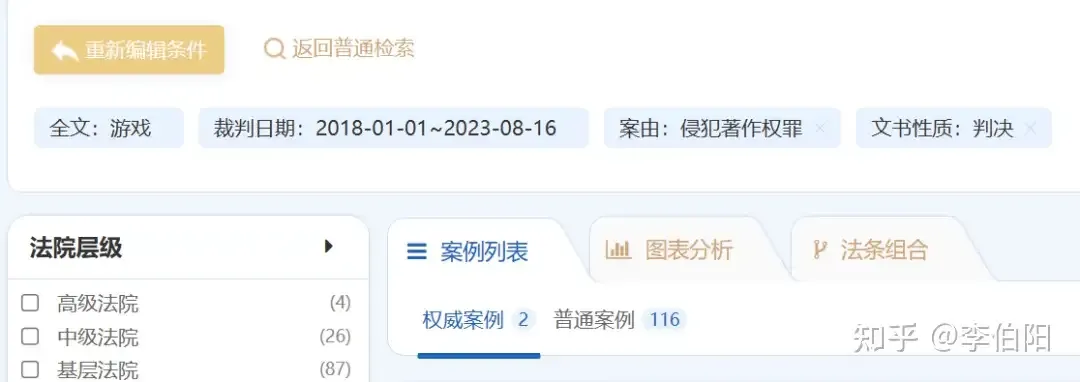
On a certain legal platform, searching for criminal judgments from January 1, 2018 to the present with the keyword “game” and the cause of action “crime of copyright infringement,” a total of 116 judgment results were found, including 2 authoritative cases:
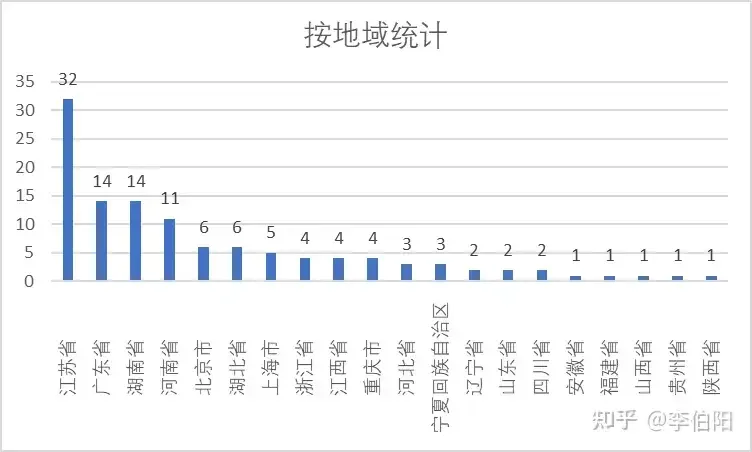
By region, the province with the highest number of cases is Jiangsu (32 cases), followed by Guangdong (14 cases) and Hunan (14 cases).
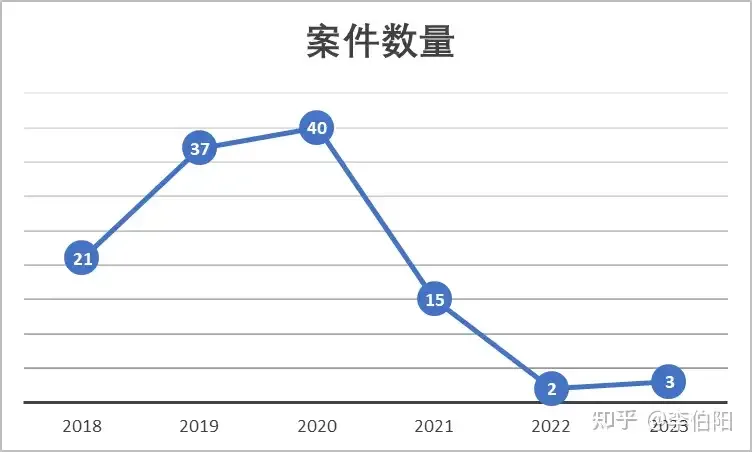
Statistics by year show that the number of cases decided reached a peak in 2020, with a total of 40 judgments. Subsequently, the number of judgments in 2021 and 2022 sharply declined, with 15 and 2 judgments respectively. However, it should be noted that the number in 2022 may have been affected by special factors such as the pandemic, so this decline cannot be considered a normal reflection of judicial trends.
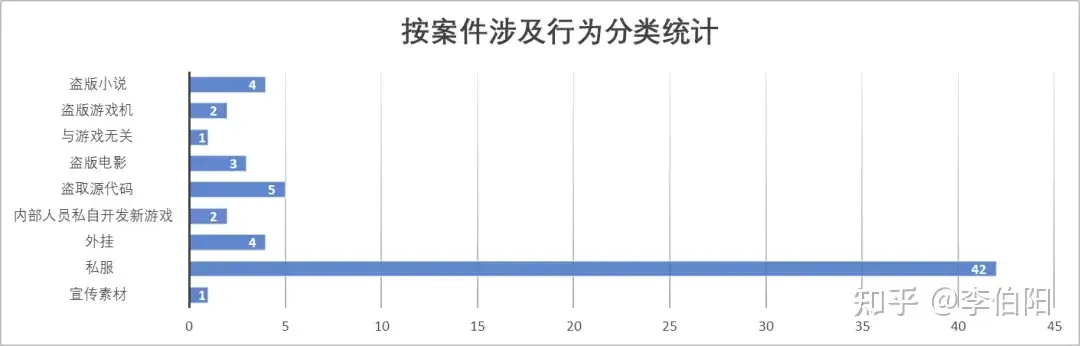
The same search conditions in the China Judgments Online database retrieved 64 documents:
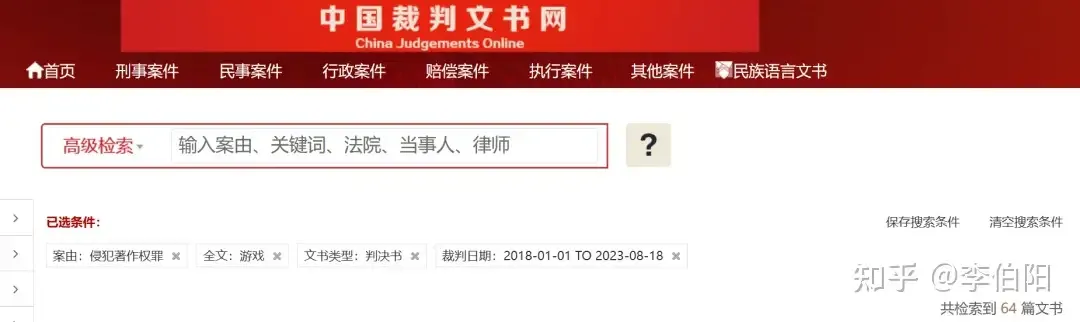
After classifying these 64 documents one by one, among those actually related to “online games,” the number of cases involving “private servers” was far ahead, reaching 42; followed by theft of source code and cheating software.
In the author’s classification, “private server” refers to game products operated directly after stealing source code, while “theft of source code” refers to game products developed separately after obtaining source code through various means.
III. Authoritative Cases
Let’s start with authoritative cases to understand which cases the官方 considers relatively “prominent” and “exemplary.”
There are two authoritative cases displayed on a certain case platform: “2018 Top 50 Typical Intellectual Property Cases of Chinese Courts: Jushi Online (Beijing) Technology Co., Ltd. and Huang Ming Copyright Infringement Case” and “Sichuan Qiu Mou Copyright Infringement Case.”
Let’s first understand and analyze the facts of the two cases:
Jushi Online (Beijing) Technology Co., Ltd. and Huang Ming Copyright Infringement Case — (2018) Jing 0108 Xing Chu No. 1932
[Basic Facts]
Defendant Huang Ming, as the operator and manager of the defendant unit Jushi Online (Beijing) Technology Co., Ltd., from 2016 onwards, in collusion with others, without the permission of the copyright owner Beijing Xianlai Huyu Network Technology Co., Ltd., operated through the defendant unit Jushi Online (Beijing) Technology Co., Ltd. a game called “Jushi Hainan Mahjong” whose source code had high identity with the “Xianlai Qiongya Hainan Mahjong” game copyrighted by Beijing Xianlai Huyu Network Technology Co., Ltd., and illegally profited for the defendant unit by having agents sell virtual currency used to启动 the game, illegally profiting RMB 162,912.9 yuan. On December 16, 2017, defendant Huang Ming was arrested. During the court trial, the defendant unit returned illegal gains of RMB 162,912.9 yuan.
[Judgment Result]
I. Defendant unit Jushi Online (Beijing) Technology Co., Ltd. is guilty of the crime of copyright infringement and is fined RMB 200,000 yuan. (The fine shall be paid within ten days from the day after this judgment takes effect.)
II. Defendant Huang Ming is guilty of the crime of copyright infringement and is sentenced to fixed-term imprisonment of one year and fined RMB 100,000 yuan.
III. The seized illegal gains of RMB 162,912.9 yuan are confiscated.
[Significance]
The court held that the defendant unit and its directly responsible manager, defendant Huang Ming, for the purpose of profit, without the permission of the copyright owner, reproduced and distributed computer software copyrighted by others, with serious circumstances, and their conduct has constituted the crime of copyright infringement and should be punished. The charges brought by the Beijing Haidian District People’s Procuratorate against the defendant unit and defendant Huang Ming for the crime of copyright infringement are clear in facts, sufficient in evidence, and the charges are established. Given that defendant Huang Ming truthfully confessed his basic crimes after arrest and during trial, the defendant unit and defendant Huang Ming showed good认罪 and remorse, and the defendant unit actively returned illegal gains, the court leniently punished the defendant unit and defendant Huang Ming in accordance with the law.
[Brief Analysis]
As the original judgment could not be found on China Judgments Online (only the civil judgment attached to the criminal case could be found, (2019) Jing 73 Min Chu No. 801), it is impossible to know where the defendant obtained the game’s source code and the similarity between the defendant’s game and the original game.
However, from the original text of this公报案例 and the civil judgment attached to the criminal case, the reason the defendant was found to have committed the “crime of copyright infringement” was that the game they developed had “high consistency in game source code” with another person’s game.
Because the illegal gains amounted to 160,000 yuan, which is below the standard for “huge amount” (250,000 yuan), the defendant was only sentenced to one year in prison.
Sichuan Qiu Mou Copyright Infringement Case (case number not found)
[Basic Facts]
On April 1, 2017, Shenzhen Shengsheng Network Technology Co., Ltd. acquired the copyright for the “Renren” board game software and authorized the distribution and operation rights to Shenzhen Shengda Meiyou Information Technology Co., Ltd. (hereinafter “Shengda Meiyou Company”).
In early February 2017, defendant Qiu Mou joined Shengda Meiyou Company as General Manager. Through his position, he learned the SVN server account and password of Shengda Meiyou Company and私自 obtained the “Renren” board game source code.
Between May and June 2017, Qiu Mou, through others, established Jiuke Xing Technology Company and Tiantianle Technology Company (Qiu Mou was the actual controller of both companies), and without the copyright owner’s permission, performed “skinning” (i.e., comprehensively changing the external expression of the original game while retaining the core resources of the original game, directly realizing a game operation mode), processing, and other forms of modification on the “Renren” board game, renaming it the “Dayingjia” board game.
In August 2017, Qiu Mou formally resigned from Shengda Meiyou Company, using Jiuke Xing Technology Company for technical support of the “Dayingjia” board game and Tiantianle Technology Company to launch and operate the “Dayingjia” board game online.
On September 6, 2017, Shengda Meiyou Company reported to the public security authorities that someone was infringing on the company’s copyright. On September 19 of the same year, the Chengdu Public Security Bureau filed the case for investigation. The procuratorial agency promptly intervened, taking the similarity鉴定 of the source code as a breakthrough, guiding the public security authorities to comprehensively collect evidence on how Qiu Mou obtained the source code and the process of modifying the game’s expression.
According to judicial鉴定, the “Dayingjia” board game source code and the “Renren” board game source code similarity reached 99%, constituting substantial similarity. On-site investigation by public security authorities showed that during the online operation of the “Dayingjia” board game, the player充值 amount was over 82 million yuan.
On December 27, the Chengdu People’s Procuratorate approved the arrest of Qiu Mou on suspicion of the crime of copyright infringement.
On January 25, 2018, the Chengdu Public Security Bureau transferred the case for prosecution. The next day, the Chengdu People’s Procuratorate assigned the case to the Chengdu High-tech Industrial Development Zone People’s Procuratorate (hereinafter “High-tech Zone Procuratorate”) for handling.
On July 28, 2018, the High-tech Zone Procuratorate initiated a public prosecution.
During the case handling, the procuratorial agency proactively facilitated a compensation agreement between Qiu Mou and Shengda Meiyou Company. Qiu Mou paid Shengda Meiyou Company 2.2 million yuan in compensation and guaranteed not to engage in the research, development, or operation of online games competing directly or indirectly with the rights holder for three years, obtaining Shengda Meiyou Company’s谅解.
[Judgment Result]
On January 22, 2019, the Chengdu High-tech Zone People’s Court adopted the procuratorial agency’s opinion, determining that Qiu Mou’s illegal business amount was over 82 million yuan and the amount of illegal gains was over 2 million yuan.
Qiu Mou was sentenced to five years in prison for the crime of copyright infringement and fined 4 million yuan. The defendant did not appeal, and the judgment has taken effect.
[Significance]
This case is a criminal case of intellectual property infringement involving computer software copyright,跨 provinces, and an especially huge amount involved. The handling of this case not only protected the defendant’s legitimate rights but also helped the victim enterprise recover economic losses, demonstrating the procuratorial agency’s heavy-handed crackdown on criminal cases of intellectual property infringement, strengthening the procuratorial agency’s judicial protection of enterprise technological innovation achievements, and serving as a示范 for the healthy development of the enterprise and even the national game industry.
(I) Positioning correctly and playing the role of judicial protection of intellectual property. Chengdu is the first national online game animation industry development base and the second national animation game industry revitalization base in China, and is one of the core hubs of the national game industry. It can be said that the state of intellectual property protection is an important indicator of the vitality and competitiveness of this base. After assigning the case to the High-tech Zone Procuratorate, the Chengdu People’s Procuratorate formed an上下 linkage mechanism, organizing multiple discussions to promote “standardization” through “refinement,” and enhance the new height of intellectual property protection through “careful handling” of cases, effectively playing the role of judicial protection of intellectual property for the animation base.
(II) Breaking through difficulties and actively exploring the “skinned game” infringement issue. This case is a computer software copyright infringement case where a new game was formed by “skinning” the game source code. The procuratorial agency consciously established an evidence chain centered on source code similarity鉴定, confirming that the game实质上 had no intellectual achievement of Qiu Mou but was an intellectual reproduction of the original game. Currently, “skin-changing” game infringement is common and severely restricts industry innovation and sustainable development. The successful handling of this case undoubtedly has a strong deterrent effect and fully demonstrates the beneficial exploration of judicial agencies to break through the困境 of “skinned game” infringement.
(III) Being objective and fair, accurately applying the law to protect the defendant’s rights. This case involved many people and complex facts. The procuratorial agency found that not only was the illegal business amount particularly huge, but the amount of funds transferred out was also particularly huge. It carefully studied and accurately determined whether to apply the penalty based on “the amount of illegal gains” or “the amount of illegal business operations,” which was ultimately recognized by the court judgment.
(IV) Urging settlement and effectively compensating the victim unit for losses. In intellectual property infringement cases, victim units face high维权 costs and difficulty obtaining compensation. The procuratorial agency proactively acted, actively urging Qiu Mou to fulfill his compensation obligations to the infringed enterprise, effectively protecting the rights of the infringed enterprise.
[Brief Analysis]
Point (II) in [Significance] has clearly expressed the core观点.
This case focuses on the infringement issue of “skinned games.” The defendant in the case served as the general manager of his former company. During his employment, he used his SVN access to obtain the original company’s game source code. After leaving, the defendant developed a new “skinned game” based on this code. Professional鉴定 showed that the code similarity between the two games was as high as 99%.
Given that the game generated over 82 million yuan in revenue, far exceeding the法定 standard for “huge amount,” the court ultimately sentenced the defendant to five years in prison.
In this case, the author believes the most核心 sentence is “the game实质上 had no intellectual achievement of Qiu Mou but was an intellectual reproduction of the original game.” It can be seen that although “skinning” was performed, with 99% consistency in the source code, both the procuratorate and the court held that “skinning” does not constitute an act reflecting “intellectual achievement.”
IV. Other Notable Cases
During the classification of China Judgments Online cases, the author also found several cases worth noting:
1. Another “Skinned Game” Case: (2020) Yue 0106 Xing Chu No. 959
[Basic Facts]
Defendant Qiu Mou is the legal representative of Guangzhou Yungang Network Technology Co., Ltd. (hereinafter “Yungang Company”). Defendant Cao Mou is the legal representative of Hongsun Huyu (Guian New District) Technology Co., Ltd. (hereinafter “Hongsun Company”). Hongsun Company is a shareholder of Yungang Company.
In April 2019, defendant Qiu Mou obtained the source code file and game package of the “Xianxia” game through a network hacker, then changed the game name to “Daojian Piaomiao Lu” and handed it to defendant Cao Mou for promotion and operation. In June 2019, defendant Cao Mou, for the purpose of company profit, signed an agreement with Shanghai Doupo Network Technology Co., Ltd. (hereinafter “Doupo Company”) in the name of Hongsun Company. Hongsun Company received an advance payment of RMB 40,000 from Doupo Company, which operated the “Daojian Piaomiao Lu” game, with Hongsun Company participating in the revenue sharing. In July 2019, Doupo Company handed the “Daojian Piaomiao Lu” game to Guangzhou Yushi Network Technology Co., Ltd., which launched it through Wuhan Lehaihai Company. From July 12 to July 24, 2019, the “Daojian Piaomiao Lu” game had 2,008充值 users, with a 充值 business amount of RMB 156,670 yuan.
After鉴定, the “Daojian Piaomiao Lu” game and the “Xianshen Zhinu” game (also known as “Xianbian 3,” “Xianxia”) developed by the victim unit Shanghai Youyan Network Technology Co., Ltd. had the same code logic structure, the same function calls and parameter content, with the identical parts exceeding 90% of both codes, showing high similarity.
[Judgment Result]
I. Defendant Qiu Mou (development) is guilty of the crime of copyright infringement and is sentenced to fixed-term imprisonment of seven months and fined RMB 20,000 yuan.
II. Defendant Cao Mou (operation) is guilty of the crime of copyright infringement and is sentenced to fixed-term imprisonment of six months and fined RMB 10,000 yuan.
III. The seized tools, including one computer external device, one mobile hard drive, two portable computers, and two mobile phones, are confiscated.
2. Both “Development” and “Operation” Bear Responsibility: (2021) Xiang 0408 Xing Chu No. 115
[Basic Facts]
In October 2018, Wu Mou (already sentenced) obtained the source code of the “Dasheng Lunhui” game software (later renamed “Menghuan Nv’erguo”) from Hong Mou (handled separately); then, Wu Mou learned from Wang Moumou (already sentenced), the business manager of Beijing Yingxiao Technology Co., Ltd. (hereinafter “Beijing Yingxiao Company”), that Beijing Yingxiao Company could distribute “unskinned” game software (referring to pirated game software); and discussed with Zhang Moumou (already sentenced) to jointly distribute the “Menghuan Nv’erguo” game with Beijing Yingxiao Company for profit.
In November 2018, Zhang Moumou sent the “Menghuan Nv’erguo” game link to Wang Moumou via QQ. Wang Moumou then sent the game link to Beijing Yingxiao Company’s WeChat group. After testing by company employees, it was found that the game’s login interface, game scenes, game characters, gameplay, and game materials were basically consistent with the “Dasheng Lunhui” game then being distributed on the market. Xu Moumou, the legal representative of Beijing Yingxiao Company, and Zhao Mou, the operations director (both already sentenced), discussed with Wang Moumou and believed that distributing the “Menghuan Nv’erguo” game carried infringement risks, but due to the good prospects of distributing the game, decided to cooperate with Zhang Moumou to distribute it. Subsequently, Wang Moumou, on behalf of Beijing Yingxiao Company, signed a “Game Exclusive Agency Cooperation Agreement” with Zhang Moumou. Beijing Yingxiao Company was responsible for game对接, operation, and downstream business channel promotion. Wu Mou and Zhang Moumou were responsible for providing game servers and technical support; and hired Liao Moumou (already sentenced) to be responsible for game server background management.
In early December 2018, Wang Moumou contacted Gao Moumou, a business person from Kunshan Aiqu Company, sending the “Menghuan Nv’erguo” game link and providing the game’s copyright registration certificate. After testing by Kunshan Aiqu Company’s operations staff, the game was deemed operable. With the consent of the defendant Gao Minggang, the legal representative of Kunshan Aiqu Company, a seven-to-three revenue sharing agreement was reached. On December 12 of the same year, Beijing Yingxiao Company officially launched the “Menghuan Nv’erguo” game online and promoted, distributed, and sold it through multiple downstream channel company game platforms. Shortly after launch, Gao Moumou learned from Wang Moumou that the distributed game was involved in an infringement dispute with Guangzhou 49 You Company and reported this to Gao Minggang. However, Kunshan Aiqu Company continued to distribute and sell the “Menghuan Nv’erguo” game until the case was uncovered. As of July 2019, Kunshan Aiqu Company’s illegal business amount from selling the “Menghuan Nv’erguo” game on the Aiqu and “Pangdazhu” platforms was 449,949.11 yuan. After鉴定, the server-side program of the “Menghuan Nv’erguo” game was identical to that of the “Dasheng Lunhui” game.
[Judgment Result]
I. Defendant unit Kunshan Aiqu Network Technology Co., Ltd. is guilty of the crime of copyright infringement and is fined RMB 300,000 yuan;
II. Defendant Gao Minggang is guilty of the crime of copyright infringement and is sentenced to fixed-term imprisonment of three years and fined RMB 230,000 yuan;
III. The illegal gains of RMB 650,000 yuan returned by defendant unit Kunshan Aiqu Network Technology Co., Ltd. to the authorities are confiscated and turned over to the state treasury.
[Brief Explanation]
This case is essentially similar to (2020) Yue 0106 Xing Chu No. 959, where the defendants obtained a third-party game’s source code through improper means, then developed a “skinned” game independently, constituting the “crime of copyright infringement.”
The significance of separately mentioning this case is that from the judgment, we can see which responsible persons will be sentenced for the “crime of copyright infringement”:
Source code provider: Hong Mou;
“Skinned” game development: Wu Mou, Zhang Moumou (game server and technical support), Liao Moumou (backend management);
Exclusive agency operator (Beijing Yingxiao Technology Co., Ltd.): Xu Moumou (legal representative), Zhao Mou (operations director), Wang Moumou (business manager);
Operator (Kunshan Aiqu Company): Legal representative Gao Minggang (defendant in this case).
Although (2020) Yue 0106 Xing Chu No. 959 also sentenced the operator to criminal liability, because the operator and the developer had a shareholding relationship (related relationship), they were considered as “one entity.” This case can clearly show that if a person insists on operating a game knowing it has infringement risks, the relevant responsible persons of the operator will also constitute a crime.
3. “Inside Job” Employees: (2018) Hu 0104 Xing Chu No. 1101, (2020) Hu 0104 Xing Chu No. 635
[Basic Facts]
In October 2016, defendant Zhao Moumou, together with Wang Mou, Gu Moumou, and Weng Mou, while employed at Zhuoyi (Shanghai) Network Technology Co., Ltd. (hereinafter “Zhuoyi Company”), after premeditation, had Weng Mou steal the source code of the “Zhuoyi Four-Player Fight the Landlord” mobile game software copyrighted by Zhuoyi Company and modify it to form a new game for the four to use in their future new company. From October 2016 to February 2017, Weng Mou repeatedly stole source code and other electronic data stored on Zhuoyi Company’s servers. On December 16, 2016, Wang Mou registered and established Shanghai Aijia Network Technology Co., Ltd. (hereinafter “Aijia Company”).
From February to March 2017, defendants Zhao Moumou, Wang Mou, Gu Moumou, and Weng Mou successively resigned from Zhuoyi Company and went to Gu Moumou’s residence in Shanghai to operate Aijia Company, launching the “77 Fight the Landlord” game, formed by modifying the “Zhuoyi Four-Player Fight the Landlord” game by Weng Mou and Zhao Moumou, on multiple platforms for user充值 and use. Until the case was uncovered, the cumulative充值 amount reached over RMB 880,000 yuan. After鉴定, the similarity between the “77 Fight the Landlord” game and the “Zhuoyi Four-Player Fight the Landlord” game was 97.16% for server-side files and 89.75% for client-side files, constituting substantial similarity.
[Judgment Result]
I. Defendant Wang Mou is guilty of the crime of copyright infringement and is sentenced to fixed-term imprisonment of three years and fined RMB 100,000 yuan.
II. Defendant Gu Moumou is guilty of the crime of copyright infringement and is sentenced to fixed-term imprisonment of three years and fined RMB 100,000 yuan.
III. Defendant Weng Mou is guilty of the crime of copyright infringement and is sentenced to fixed-term imprisonment of three years and fined RMB 100,000 yuan.
IV. Defendant Zhao Moumou (voluntary surrender, accomplice) is guilty of the crime of copyright infringement and is sentenced to fixed-term imprisonment of one year, suspended for one year, and fined RMB 10,000 yuan.
V. The defendants are ordered to return the illegal gains to the victim unit.
[Brief Explanation]
Similar to the Sichuan Qiu Mou case, this case also involves inside employees stealing the game source code and making “skinned” games to operate. The difference is that Qiu Mou was a general manager, while the four defendants in this case were employees.
Similarly, this case confirmed “substantial similarity” through comparison of game files and high similarity, thus establishing the “crime of copyright infringement.”
4. Using Company Resources to Create “Official Skinned” Games for Oneself: (2020) Liao 0102 Xing Chu No. 1019
[Basic Facts]
From February to September 2017, defendant Su Jian, while serving as the mobile game department manager of Shenyang Zhima Kaimen Technology Co., Ltd. (hereinafter “Zhima Kaimen Company”), at the office location in Shenyang, taking advantage of his job position, under the pretext of game upgrades and development, arranged for programmers and artists in his department to process and replace pictures for games such as Mahjong and Chess copyrighted by Zhima Kaimen Company, and used Zhima Kaimen Company’s human, material, and technical resources to私自 develop other game software, thereby upgrading and developing more than ten games.
On April 13 of the same year, defendant Su Jian established and actually controlled Shenyang Bajie Technology Co., Ltd., launching and operating the above ten games online through information networks, engaging in profit-making activities by pushing advertisements in the launched games to earn fee sharing.
After audit, defendant Su Jian received advertising fees from Tianjin Kuaiyou Century Technology Co., Ltd. and Shenzhen Tencent Computer System Co., Ltd. for game operations in the name of Shenyang Bajie Technology Co., Ltd., totaling 369,176.11 yuan.
[Judgment Result]
I. Defendant Su Jian is guilty of the crime of copyright infringement and is sentenced to fixed-term imprisonment of three years and fined RMB 100,000 yuan, to be turned over to the state treasury.
II. Defendant Su Jian is ordered to return illegal gains of RMB 369,176.11 yuan, to be turned over to the state treasury.
[Brief Explanation]
Another “inside job” case, but the biggest characteristic of this case is “official skinning.” Defendant Su Jian took advantage of his “manager” position to have other employees develop “skinned” games for him, operating them through his company and obtaining profits. This behavior also constitutes the “crime of copyright infringement.”
5. Promotional Material Infringement: (2021) Gan 1102 Xing Chu No. 406
[Basic Facts]
The “Jiuyao Game” WeChat public account was owned by defendant Tan Bowen. From February 2020 to June 2020, defendant Tan Bowen, without the permission of the original copyright owner, a Jiangxi information technology company, copied fine art works created by the Jiangxi company for promoting games (featuring actors Donnie Yen and Aaron Kwok) from Baidu, then reproduced and distributed them in promotional articles on the “Jiuyao Game” WeChat public account to promote the mobile game “Mie Shi Chuan Qi Zhi Wu Sheng Chuan Qi” operated by defendant Tan Bowen, thereby attracting netizens and players to enter the game through the promotional articles and generate profits.
On May 15, 2020, the Shangrao investigation agency extracted the click counts of the fine art works featuring Donnie Yen and Aaron Kwok from articles published by the “Jiuyao Game” WeChat public account on May 5 and May 6, 2020. The click count for the image on May 5, 2020 was over 52,000 times, and the click count for the image on May 6, 2020 was over 62,000 times, with a total image click count of over 114,000 times.
On May 26, 2020, after鉴定 by the Jiangxi Police College Institute of Forensic Science, the promotional images featuring Aaron Kwok and Donnie Yen of the Jiangxi information technology company were found to be substantially similar to the images used by defendant Tan Bowen in the “Jiuyao Game” WeChat public account promotional articles.
[Judgment Result]
I. Defendant Tan Bowen is guilty of the crime of copyright infringement and is sentenced to fixed-term imprisonment of one year and two months, suspended for two years, and fined RMB 20,000 yuan;
II. The seized items shall be disposed of by the seizure agency in accordance with the law.
[Brief Explanation]
This case is the only one among the 64 judgments related to “art promotional materials” and also the only case where “click count” was used as the basis for sentencing.
In the eyes of many game industry professionals, “copying” promotional materials from each other is a common practice and is often considered a simple matter of “paying compensation.”
However, from this case, we can see that directly appropriating others’ promotional materials can also constitute the “crime of copyright infringement,” and the minimum click count required is only 50,000 times, which is easily achieved for art promotional materials.
In this case, the total click count was over 110,000 times, resulting in a sentence of “one year with a two-year suspension.”
V. Implications
Through the analysis of the various cases in this article, we can understand the current认定 standards and sentencing situations of law enforcement and judicial agencies for the “crime of copyright infringement” in the game industry. From this, we can draw the following implications:
1. “Source Code Similarity” as the Core Infringement Determination Standard
From “authoritative cases” to ordinary cases, it is easy to see that one of the gold standards for determining whether the “crime of copyright infringement” is constituted is “source code similarity”:
Private servers: 100% source code similarity;
“Skinned” games: over 95% source code similarity;
“Inside job” games: core source code similarity.
Reading the evidence lists of various cases, it is easy to find that authorities typically send the “source code” of the game in question to鉴定 agencies for similarity determination with the original work’s code, using the鉴定 agency’s “Judicial鉴定 Opinion” as core evidence to determine that the defendant’s conduct constitutes infringement.
Therefore, it is easy to see that if a game developer obtains a third-party game’s source code through various means (such as unpacking, decompilation, purchase, hiring their employees, etc.) during the development process, and directly uses it for “skinning” or with minimal changes in their own game, it can basically be directly considered that this conduct constitutes the “crime of copyright infringement.”
So, if someone implements the same gameplay functions using a different programming language (e.g., C#) based on another person’s game written in another language (e.g., JavaScript, TypeScript), would that constitute “infringement” or even a “crime”?
The author believes that based on current judicial trends and legislative purposes, this can be judged through originality and creative originality factors:
Copyright typically protects expressions with originality and creative originality, i.e., the “intellectual achievement” mentioned in the above authoritative case.
If the specific method of implementing the same gameplay function is to obtain the other party’s code through various means and convert it 1:1 using tools or manually, then it必然 constitutes infringement.
Although at the code level, different programming languages have their own syntax, code format, and coding standards, resulting in the final code not being completely identical or even having obvious differences, during the conversion process, even if there is a “major breakthrough” in technology using a new language, in terms of the gameplay function modules actually written, there is no “original” expression, i.e., no new “intellectual achievement.”
If it is purely based on the expression of the other party’s gameplay function (e.g., backpack sorting) and written in another language entirely based on one’s own original design to implement similar functions, the risk of being independently found to infringe is relatively low.
2. Game Operators’ Legal Liability Is Determined Based on Subjective Knowledge and Behavior
The “crime of copyright infringement” is not entirely a crime that only belongs to “development.”
From the cases above, we can see that if a game operator knows a game is infringing but still continues to operate and promote it, they must also bear criminal liability, although the determination will be based on their subjective maliciousness.
In the case of (2021) Xiang 0408 Xing Chu No. 115 (the “Menghuan Nv’erguo” case), the legal representative, operations director, and business manager of the exclusive agency operator, as well as the legal representative of the operator, all clearly understood that “Menghuan Nv’erguo” was an infringing game but still insisted on operating and promoting it, ultimately bearing criminal liability.
In contrast, Gao Moumou, the business person of the operator (no related judgment found), was exposed to “regular” game packages and copyright certificate documents at the initial contact stage. After learning that the game was infringing, he promptly reported to the legal representative, fulfilling his reporting obligation, so no criminal liability was found (please correct if wrong).
In addition, in the (2020) Liao 0102 Xing Chu No. 1019 case (“official skinning”), the defendant provided the game to Tianjin Kuaiyou Century Technology Co., Ltd. and Shenzhen Tencent Computer System Co., Ltd. for operation and received advertising fee revenue. However, these two operators clearly could not have known that the game was infringing, so they did not need to bear criminal liability.
Based on existing civil cases, courts默认 that companies within the game industry understand each other’s products (i.e., have “contact”). Therefore, unless there is strong evidence, it is difficult to simply use “unfamiliarity with the infringed game” as a defense.
Therefore, unless it is a distribution platform, when an ordinary operator encounters a game for potential cooperation, they should carefully review whether it has infringement risks, at least conduct basic formal review, and retain relevant review evidence. When discovering risks before or during operation, they should promptly stop cooperation to avoid unnecessary risks and even criminal liability.
3. Promotional Materials Can Also Be a Breakthrough
In recent years, the “user acquisition through paid traffic” approach has risen, with many companies using “paid traffic” as their primary promotional method, placing “massive” advertisements on various platforms. However, before the rise of AI this year, all promotional materials basically had to be manually produced (drawing, editing, filming, recording, etc.). When normal production speed couldn’t keep up with the demand for paid traffic materials, some companies started to have “dishonest thoughts” and directly “took” others’ materials for use.
In many people’s eyes, this kind of “taking” of materials is usually only a civil liability. Because paid traffic ads are usually not run for long, making evidence collection difficult, the duration short, and profits hard to prove; if sued, the最终 compensation amount is not high, and the revenue generated by the material could potentially cover the compensation. Therefore, after evaluating “benefits” and risks, many companies often choose to “take the risk.”
However, the (2021) Gan 1102 Xing Chu No. 406 case proves that simply “taking” two promotional materials could lead to a sentence of “one year with a two-year suspension.”
Of course, this case may involve the fact that the materials were celebrity endorsement photos and the identity of the infringed game, leading to more serious legal consequences. Nevertheless, since such a case has emerged, any enterprise or individual assessing risks should not only consider civil liability as the upper limit but also consider more serious criminal consequences.