Does Advertising Under 'Don't Laugh...' Constitute Infringement?
Analyzes whether posting promotional comments under WeChat Moments paid ads constitutes infringement under China's Anti-Unfair Competition Law, distinguishing between harmless banter, free-riding commercial exploitation, and potential commercial defamation risks.
You may have recently started seeing some quirky ads again.
Specifically:
“Don’t laugh, you can’t pass the second level either.”
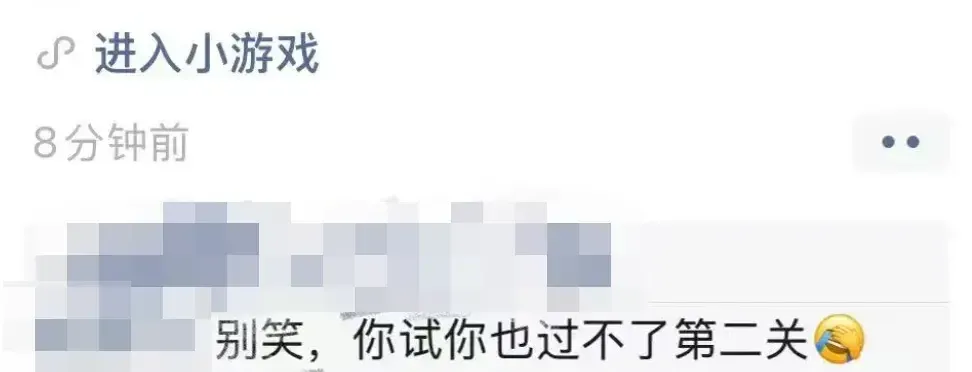
Since these ads are heavily promoted and keep appearing in your Moments feed, many people have started replying under them, taking advantage of the Moments comment feature to hitch a free ride.
Some are joking around.
Some are repeating “Don’t laugh.”
And of course, some are using these ad comment sections to promote their own products.
But does this constitute infringement?
*This article reflects only the author’s personal views and does not constitute legal advice or a legal opinion.
I. Joking and Simple “Repetition” Generally Do Not Constitute Infringement
Commenting under paid ads or simply “repeating” the phrase “Don’t laugh” will generally not constitute infringement.
In fact, advertisers may even welcome the widespread banter — more “quirky” comments can actually boost engagement and reach.
II. What About Using It to Promote Your Own Product?
This behavior has a common name: “free-riding.”
In practice, it is typically governed by Article 2 of the Anti-Unfair Competition Law.
Article 2: In their production and business operations, business operators shall adhere to the principles of voluntariness, equality, fairness, and good faith, and comply with laws and business ethics. “Unfair competition acts” as referred to in this Law refer to acts by business operators that, in their production and business operations, violate the provisions of this Law, disrupt the order of market competition, and harm the lawful rights and interests of other business operators or consumers. “Business operators” as referred to in this Law refer to natural persons, legal persons, and unincorporated organizations engaged in the production or sale of goods or the provision of services (hereinafter, goods include services).
In other words, yes, it is an infringing act.
Why?
WeChat Moments paid advertising is a form of paid promotion — businesses pay a fee hoping that more people will see their ad.
Using someone else’s ad comment section to promote your own product amounts to “leveraging (i.e., freeloading off)” their paid promotion efforts to market your own product, violating the principle of fairness (“freeloading”), and in principle harming the lawful rights and interests of other business operators.
But isn’t it only visible to friends?
Unlike direct paid ads that can target the entire platform, comment-section “free-ride ads” are usually only visible to the commenter’s friends.
However, this is not a complete defense.
First, the core of these ads is “repeated exposure.”
Considering that excessive posting in Moments may lead to being blocked, the same “Moments ad” (whether from a WeChat seller or another business) is usually posted only once. If a friend happens to miss it, it’s gone and hard to see again.
But if you place an ad in the comments section, you can use the ad targeting rules to repeatedly appear before your friends, greatly increasing exposure while avoiding the “loss” of being skipped over (since paid ads are inserted into the feed and not sorted chronologically).
Second, another core aspect of such ads is “precision targeting.”
No one chooses “all users” when placing an ad — that would waste the ad budget. Therefore, paid ads inevitably appear before “the most suitable audience.”
Advertising in the comments, especially for similar products (e.g., games), means leveraging someone else’s “ad spend” to achieve “precision targeting.”
Precision targeting on WeChat Moments without spending a dime — “maximum cost-effectiveness.”
Even if all the friends in Moments are “competitors,” there is no strict legal or practical distinction between “competitors” and “customers.”
After all, who hasn’t played someone else’s game or paid for someone else’s game?
III. Another Scenario: Leaving Negative Comments
What about leaving negative comments, such as “Don’t play this, everyone”?
This breaks down into two scenarios:
Ordinary users giving their opinion
If it’s just a personal opinion (whether they’ve actually played it or not), simply saying “don’t play it” — unless accompanied by “insulting remarks” or “false statements” (e.g., “Don’t play it, it’s a money-grabbing game”) — it will generally not constitute infringement.
【Be careful to distinguish】
In general, “This is a stupid game” is usually considered a “normal evaluation.” Unless repeated in multiple places and multiple times, it generally does not infringe.
However, “All the designers of this game are idiots” is typically considered an “insulting evaluation” and may constitute infringement.
It is recommended to “attack the issue, not the person.”
Comments from competitors
If the negative commenter is also in the “gaming industry” and holds a key position (titles like lead, producer, boss, etc.), then criticizing without reasonable justification in someone else’s comment section may constitute infringement.
At the mild end, it could be “unfair competition”; at the severe end, “commercial defamation.”
As for what constitutes a “reasonable justification,” one principle can be followed:
“Only evaluate from a technical standpoint.”
For example, pointing out where bugs are or where optimization is lacking — this is an objective technical evaluation.
But simply saying that someone else’s game content, game balance, or gameplay is bad is more likely to be considered a “subjective” evaluation, which may easily constitute infringement.
IV. But in Practice, It’s Hard to Detect
First, “invisibility”:
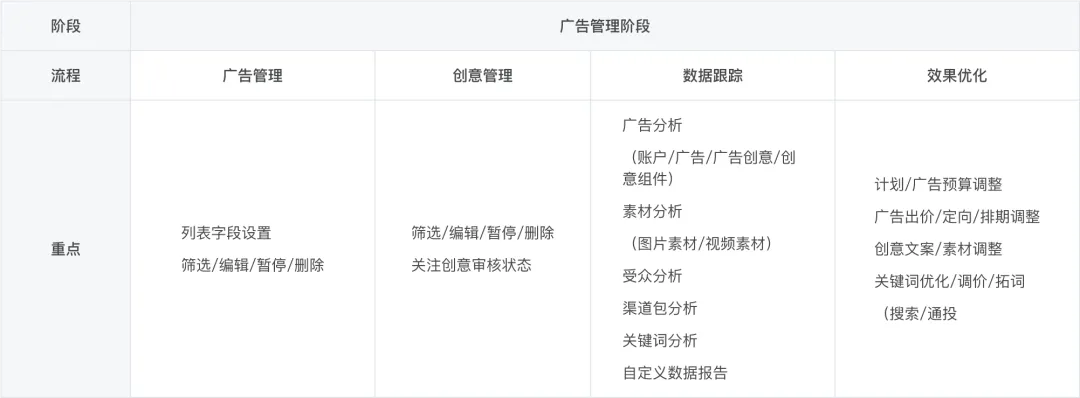
According to the ad management backend provided by Tencent’s official website, advertisers may not be able to see the specific information in the comments section (but FB ads allow this, so be extra careful when commenting under FB ads):
Tencent’s ad assistant AI also expressed similar content:
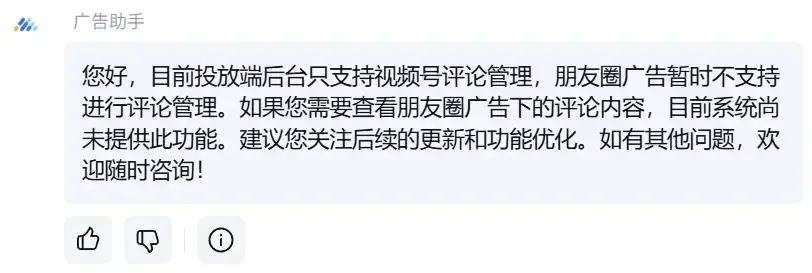
Therefore, unless someone happens to be friends with an employee of the advertiser and that employee reports it, it’s not easy to detect.
Second, “difficulty in determining damages”:
Although “visible only to friends” cannot be used to absolve liability, it does mean the scope of dissemination is limited.
Although the WeChat friend limit is around 10,000, most people won’t reach that number. After considering the commenter’s number of friends, you’d then need to calculate how many people actually saw the message and what specific losses were caused (or gains obtained)…
Difficult and costly to calculate — this is also something advertisers need to consider.
V. In Conclusion
Moderate banter is fun, but “free-riding” is illegal.
While it may go unnoticed for a time, or even if noticed may not be acted upon, what if?
Be careful, or you might become
“Don’t laugh — you might be the next one fined.”