Computer System Failure Prevents Work — Does the Company Have the Right to Reschedule Shifts to the Weekend?
Examines whether employers can legally require employees to reschedule missed work hours to weekends following the global 'Blue Friday' CrowdStrike outage, covering labor law provisions, wage deduction rules, and employee handbook best practices.
Yesterday, a large number of corporate and personal computers around the world experienced a “Blue Friday.”
A bug in an update patch from a US firewall software company caused a large number of Windows computers to suddenly blue screen. Upon restart, they could only enter recovery mode and could not boot normally.
Since it was a workday, many workers got an unexpected break.
Some netizens even called it “International Blue Screen Day.”
 (Look how sad netizens are that they can’t work)
Some less affected companies had their IT departments respond urgently to fix the error for employees.
But some companies chose to give employees the day off and have them make up the work on the weekend.
So,
Is it illegal to require employees to reschedule/swap shifts due to such a third-party failure?
This article reflects only the author’s personal views and does not constitute any legal advice or legal opinion.
** This article only discusses non-emergency service units; industries such as transportation, finance, and daily necessities are not within the scope of discussion.
I. Legal Provisions
After reviewing all current domestic labor-related laws and regulations
regarding the specific issue of “shift adjustments due to third-party system failures,”
there are currently no specific provisions.
At the same time, relevant laws and regulations do not clearly state whether a company can directly adjust shifts when encountering such exceptional circumstances.
Everything falls into a gray area.
II. So, Can Shifts Be Adjusted?
My personal opinion leans toward
Yes, they can.
The Labor Law only specifies daily working hours and weekly working hours, but does not strictly regulate which specific days are worked.
Note: Weekends are not statutory rest days.
Article 36: The state implements a working hour system under which workers shall work no more than eight hours per day and an average of no more than forty-four hours per week.
At the same time, the Labor Law also stipulates that “workers shall fulfill their work tasks.”
Article 3: Workers shall have the right to equal employment and freedom of choice of occupation, the right to obtain remuneration for work, the right to rest and leave, the right to protection of occupational safety and health, the right to receive vocational skills training, the right to enjoy social insurance and welfare, the right to submit labor disputes for handling, and other labor rights as provided by law.
Workers shall fulfill their work tasks, improve their vocational skills, implement occupational safety and health regulations, and observe labor discipline and professional ethics.
When a worker is unable to fulfill their work tasks due to third-party reasons (the same applies to severe weather), the company may reschedule the shift (or half-day) to the weekend to allow the worker to complete their work tasks.
However, if the current week follows an alternating six-day workweek, the adjustment can only be postponed to the following week, as the law requires at least one day of rest per week.
Article 38: Employers shall ensure that workers have at least one day of rest per week.
III. If a Sudden Shift Change Forces an Employee to Take Leave, Should Their Pay Be Deducted?
Weekends are always wonderful and short
Therefore, many people also choose to schedule activities such as weekend trips, shopping, concerts, etc.
But a last-minute shift change can disrupt everything.
So, if a sudden shift change makes it impossible to carry out pre-arranged weekend plans, forcing the employee to take leave,
can the company deduct wages according to personal leave regulations?
Rationally Speaking
The Labor Law only stipulates that the company needs to negotiate with the employee when changing the labor contract or extending working hours.
However, shift adjustments due to temporary failures (not caused by either party) are not specifically addressed at all.
Considering that the leave has already been arranged in advance and the makeup day itself would have been a normal workday, deducting wages according to regulations when an employee takes personal leave carries minimal legal risk.
** Unless otherwise agreed in the labor contract.
From a Human Perspective
From a human perspective, this shift adjustment was not what the employee wanted.
If the employee had already scheduled activities, the company could choose, from a human standpoint, not to deduct wages for the leave.
But this requires that the employee actually has activities planned and can provide some evidence (pre-purchased train tickets, event tickets, chat records, travel plans, etc.).
IV. It Can Be Done More Thoroughly
When labor laws lack relevant provisions, another fallback approach is the Labor Contract and the Employee Handbook signed by both parties.
When drafting relevant texts, companies can consider regulating special circumstances such as severe weather, temporary power outages, water outages, elevator damage (if the company is on lower floors, theoretically unaffected), equipment damage, and a series of other situations, stipulating that the company has the right to make temporary shift adjustments without paying additional compensation.
When there are relevant regulations and the employee has agreed in advance, the occurrence of related disputes can be reduced.
V. Supplementary: What If an Employee Itchily Updates Their System, Causing a Long Blue Screen/White Screen Update That Prevents Work?
Windows has its well-known update blue screen:

Mac OS also has its update black screen:

They share a common characteristic:
Even Microsoft/Apple cannot estimate how long the progress bar will take.
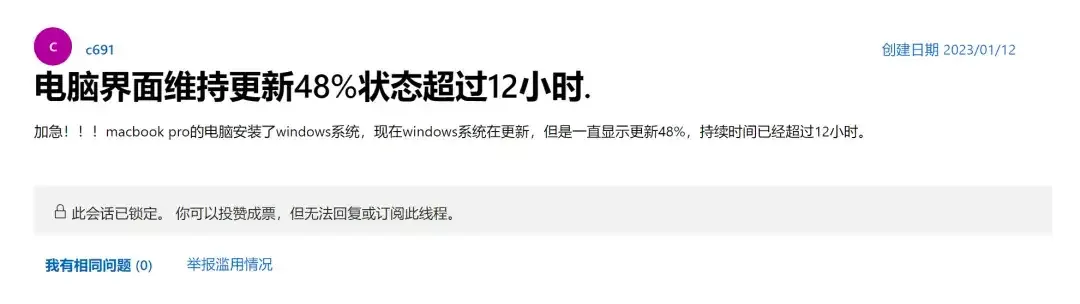
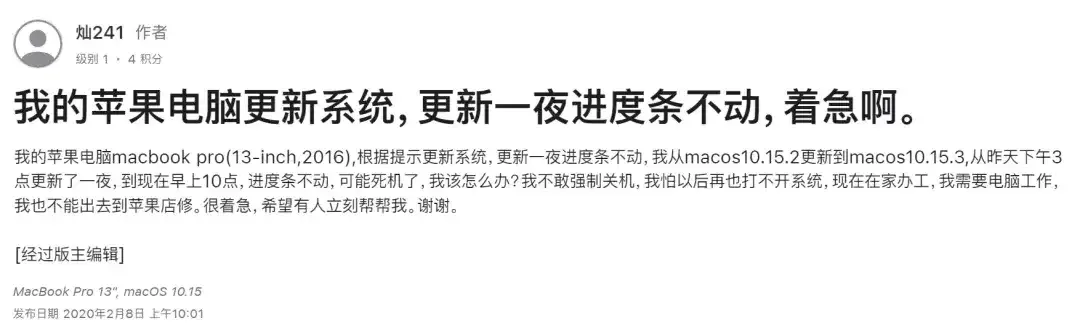
In this situation, it appears to be due to employee fault (ignoring system errors for now) that they are unable to work for an extended period.
If the company requires the employee to work overtime or deducts paid vacation time as a result, it seems fine in theory?
However!
Before taking any action, many factors need to be considered, such as:
-
Was it intentional on the employee’s part, or did the system update on its own?
-
Has the company stipulated that only IT can upgrade the system?
-
Has the company enabled group policies to restrict system upgrades?
-
Has the company provided training on system upgrade issues?
etc., etc.
If the company has no clear regulations, the employee can fully use the reason of “just trying to work” to make “updating the system” part of the “preparation work,” thereby legitimizing the “slacking off” process during the “system update.”
Therefore
Optimizing the Employee Handbook
Might as well start on this makeup day (if any)