[Rant] These AI Services Are All Banned, and There Are Even More 'Absurd' Restrictions | 'Qinglang · Curbing AI Technology Abuse' Officially Launched
Reviews China's Qinglang campaign against AI technology abuse, analyzing the two-phase crackdown on unregistered AI services, deepfakes, and AI-generated rumors while questioning the feasibility and overbreadth of restrictions on training data and AI-assisted writing.
Today (April 30), the Cyberspace Administration of China publicly announced the launch of a nationwide 3-month special campaign called “Qinglang · Curbing AI Technology Abuse.”
The campaign is divided into two phases: Phase 1 targets 6 types of prominent issues at the AI source, and Phase 2 targets 7 types of prominent issues related to AI applications.
While the intention is good, some of the restrictions in the content are quite “puzzling.”
Even this has to be banned?
Let’s go through them one by one.
*This article represents only the author’s personal views and is not intended as legal advice or opinion.
I. Phase 1
According to the official explanation, Phase 1 is
Strengthen source governance of AI technology, clean up and rectify illegal AI applications, strengthen management of AI-generated synthetic content and identification, and push website platforms to improve detection and forgery identification capabilities.
It is divided into the following 6 types of prominent issues:
Illegal AI Products
Using generative AI technology to provide content services to the public without fulfilling large model registration or filing procedures.
According to the “Interim Measures for the Management of Generative AI Services,” those that “provide generative AI services with public opinion attributes or social mobilization capabilities” need to undergo algorithm registration and change/cancellation procedures.
This Qinglang action directly restricts that as long as generative AI is used to provide content services to the public, registration is required.
This means some privately integrated AI applications — regardless of whether they have public opinion attributes or social mobilization capabilities — all need to be registered.
It further tightens the opening for ordinary people to provide AI tools.
Providing functions such as “one-click undressing” that violate laws and ethics.
Reasonable. Illegal and infringing acts should be stopped.
Without authorization or consent, cloning and editing others’ biometric information such as voices and faces, infringing on privacy.
AI singers, AI remixes — none will escape.
“Look in my eyes” may become a swan song.
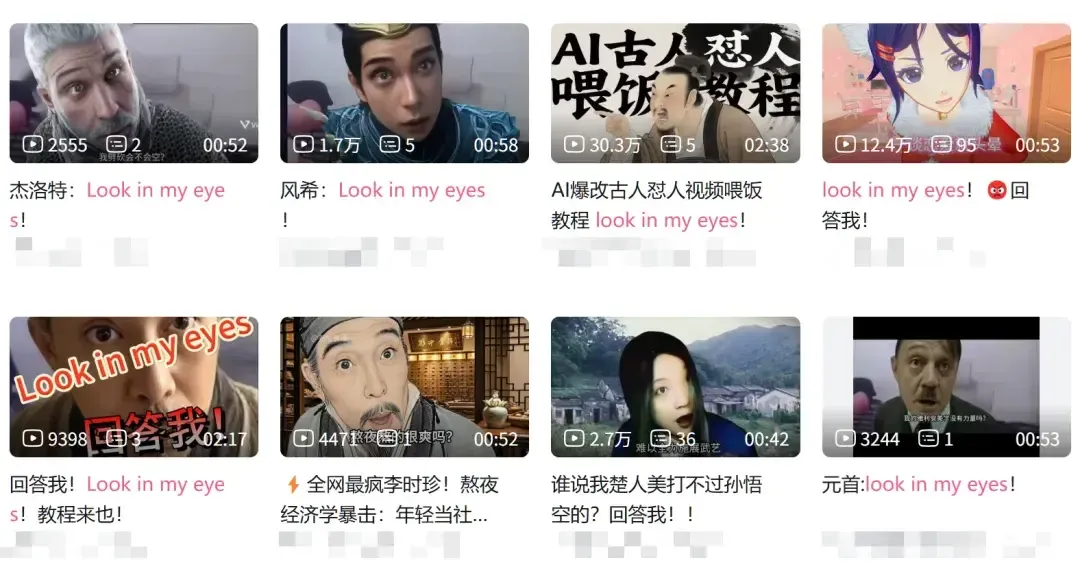
Teaching and Selling Illegal AI Product Tutorials and Merchandise
Teaching tutorials on using illegal AI products to forge face-swapped videos, voice-changed audio, etc.
Considering the breadth of “teaching”
Various AI-focused Bilibili creators risk getting banned in one sweep.

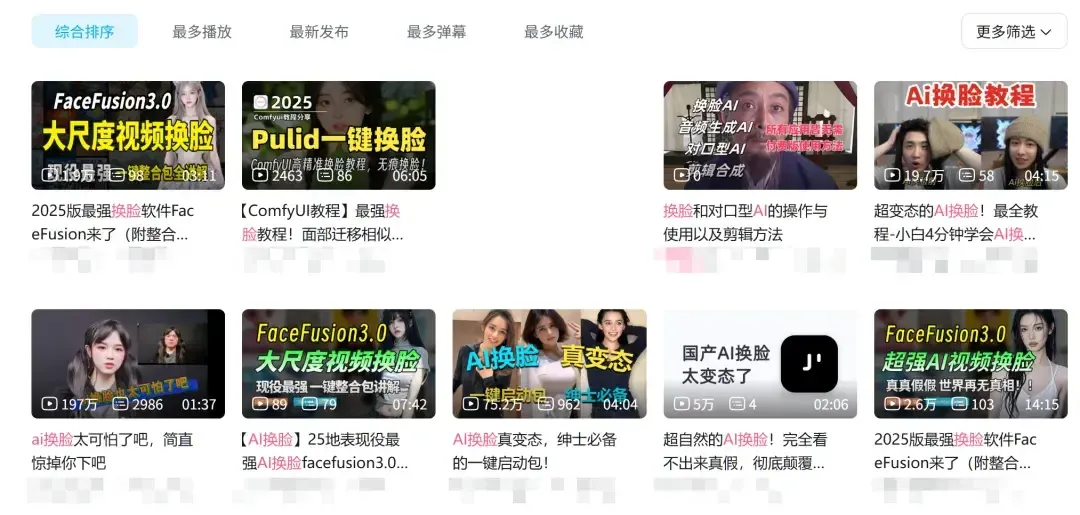
Selling merchandise information for illegal “voice synthesizers” and “face-swapping tools.” Marketing, hyping, and promoting illegal AI product information.
AI integration packages on Taobao and Xianyu may be delisted. Moreover, image mirrors of face-swapping and voice-changing application packages on various computing power websites may also be suspected of violations.
But how is “illegal AI” defined?
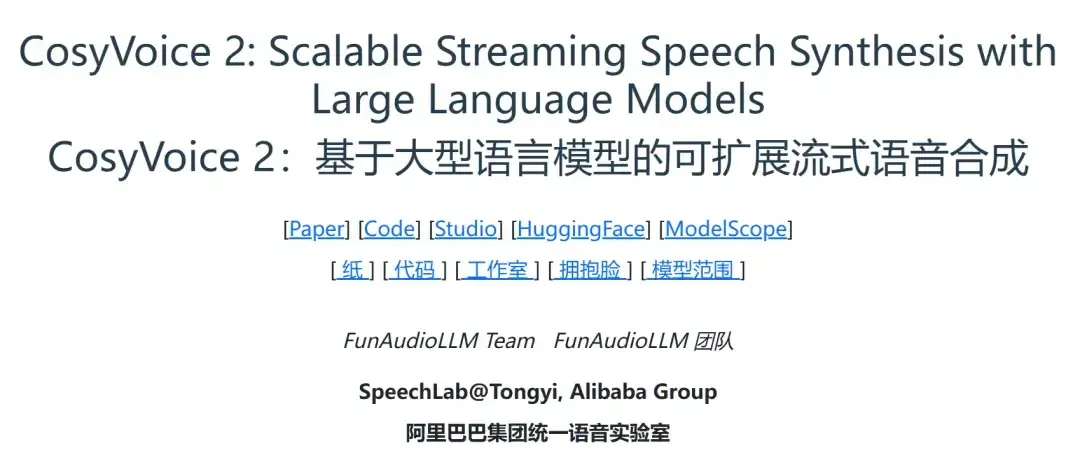
According to the first point, is Alibaba’s CosyVoice model considered illegal?
After all, it provides an open-source model that anyone can easily use, and anyone can use it to clone and edit others’ voices without consent.
Lax Management of Training Data
Using information that infringes on others’ intellectual property rights, privacy rights, etc.
One sentence: No AI training data does not infringe on intellectual property in the broad sense.
Especially when copyright law has not been amended and the AI law has not been published, any mainstream AI training data inevitably “infringes on intellectual property.”
Using false, invalid, or inaccurate content scraped from the internet. Using illegally sourced data. Failing to establish a training data management mechanism, failing to regularly inspect and clean up illegal data.
One sentence: No AI training data does not contain false, invalid, or inaccurate content.
No individual, group, or institution can exclude false, invalid, or inaccurate information from an AI with hundreds of billions of parameters. They can only reduce the “probability of occurrence” of inaccurate content through larger amounts of data.
In fact, even search engines cannot avoid indexing webpages with false, invalid, or inaccurate content.
This is truly “making things difficult” with overly idealistic expectations of the online environment.
Weak Safety Management Measures
Failing to establish content review, intent recognition, and other safety measures commensurate with business scale. Failing to establish effective violation account management mechanisms. Failing to conduct regular safety self-assessments.
Understood — AI services can implement another layer of sensitive word detection before output, and frequent violators can be banned.
Social platforms have unclear understanding and lax control over AI auto-reply and other services accessed through API interfaces.
Ambiguous.
Does it refer to APIs provided by the social platforms themselves (like Yuanbao), or APIs that allow others to access (like enterprise WeChat bots)?
Self-deployed bot services on various platforms may face tightening.
Failure to Implement Content Identification Requirements
Service providers failing to add implicit or explicit content identifiers to deep synthetic content, failing to provide or prompt users about explicit content identification functions.
Agreed — AI synthetic content indeed needs to be identified.
Content distribution platforms failing to monitor and identify generated synthetic content, leading to false information misleading the public.
A nightmare for platform reviewers. Until detection models can 100% detect AI-generated results, reviewers must manually evaluate and tag.
Especially as AI gets “more and more realistic,” accurately distinguishing with the naked eye is a major problem.
Security Risks in Key Areas
Registered AI products providing Q&A services in key areas such as healthcare, finance, and minors, without targeted industry-specific safety review and control measures.
In simple terms:
AI medical consultation cannot give medication recommendations
AI stock analysis cannot give investment (buy/sell) recommendations
Even AI has broken through technical limitations and can no longer have “hallucinations”
II. Phase 2
According to the official explanation, Phase 2 is
Focusing on prominent issues such as using AI technology to manufacture and publish rumors, false information, pornographic and vulgar content, impersonating others, and engaging in online water army activities.
I personally very much agree with the intended purpose, but the specific measures may be too “broad.”
Using AI to Manufacture and Publish Rumors
Fabricating rumors out of thin air about current affairs, public policy, social livelihood, international relations, emergencies, etc., or willfully speculating and maliciously interpreting major policies.
Full support.
AI should not be used to create or generate such content.
Using AI to Manufacture and Publish False Information
Splicing and editing unrelated images, text, and videos to generate mixed, half-true, half-false information.
Full support.
Using AI fortune-telling, AI divination, etc., to mislead and deceive netizens, spreading superstitious beliefs.
Various AI Tarot, AI Feng Shui, AI astrological charts, AI dream interpretation apps and services may face a wave of delistings.
Using AI to Manufacture and Publish Pornographic and Vulgar Content
Using AI undressing, AI drawing, and other functions to generate synthetic pornographic content or indecent images/videos of others.
Support.
Producing and publishing bloody and violent scenes, deformed human bodies, surreal monsters, and other horrifying and eerie images.
Understandable.
Generating and synthesizing “little yellow novels,” “dirty jokes,” and other clearly sexually suggestive novels, posts, and notes.
Understandable.
Using AI to Impersonate Others for Infringement and Illegal Acts
Using deepfake technologies like AI face-swapping and voice cloning to impersonate experts, entrepreneurs, celebrities, and other public figures.
Very much in support.
Using AI to impersonate family members or friends for online fraud and other illegal activities. Improperly using AI to “resurrect the deceased,” abusing the information of the deceased.
Full support.
Using AI to Engage in Online Water Army Activities
Using AI technology to “farm accounts,” simulating real users to batch register and operate social media accounts.
Full support.
Quickly regulate accounts whose entire content is AI-generated.
AI Product Services and Application Violations
Producing and distributing fake, copycat AI websites and applications. AI applications providing illegal features and services.
Not allowing the “expand search trends/hot topics/hotspots into articles” function is really making things difficult for AI.
Infringement on Minors’ Rights
AI applications inducing minors to become addicted, having content in minor mode that affects minors’ physical and mental health, etc.
Support.
Domestic AI services launching minor mode is just around the corner.
III. What to Do?
This “Qinglang” content clearly aims to address the increasing number of illegal uses of AI.
However, the content also includes overly broad scope, unclear definitions, and content that doesn’t match reality.
Various service providers will theoretically try their best to comply.
But the concern is that overly broad restrictions
May inadvertently hurt a large number of ordinary people who are passionate about AI.