"Pornographic Images" or "Human Body References"? | How to Define Misconduct in Art Positions
Examines how to distinguish between legitimate human body reference images and pornographic material on art employees' work computers, offering guidance for both employees and employers on policies, investigations, and wrongful termination risks.
Some time ago, a game company dismissed an employee on grounds of “serious work misconduct including attendance fraud, storing a large number of pornographic images on work computer, and privately discussing salaries.”
The employee filed for labor arbitration claiming “wrongful dismissal,” and the company, dissatisfied with the arbitration result, filed a lawsuit with the Chengdu High-tech Development Zone Court.
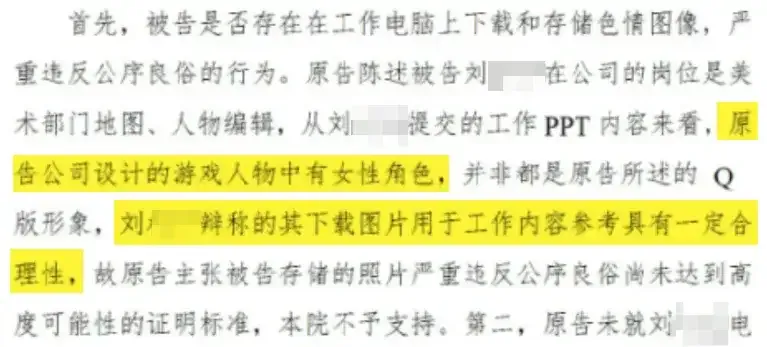
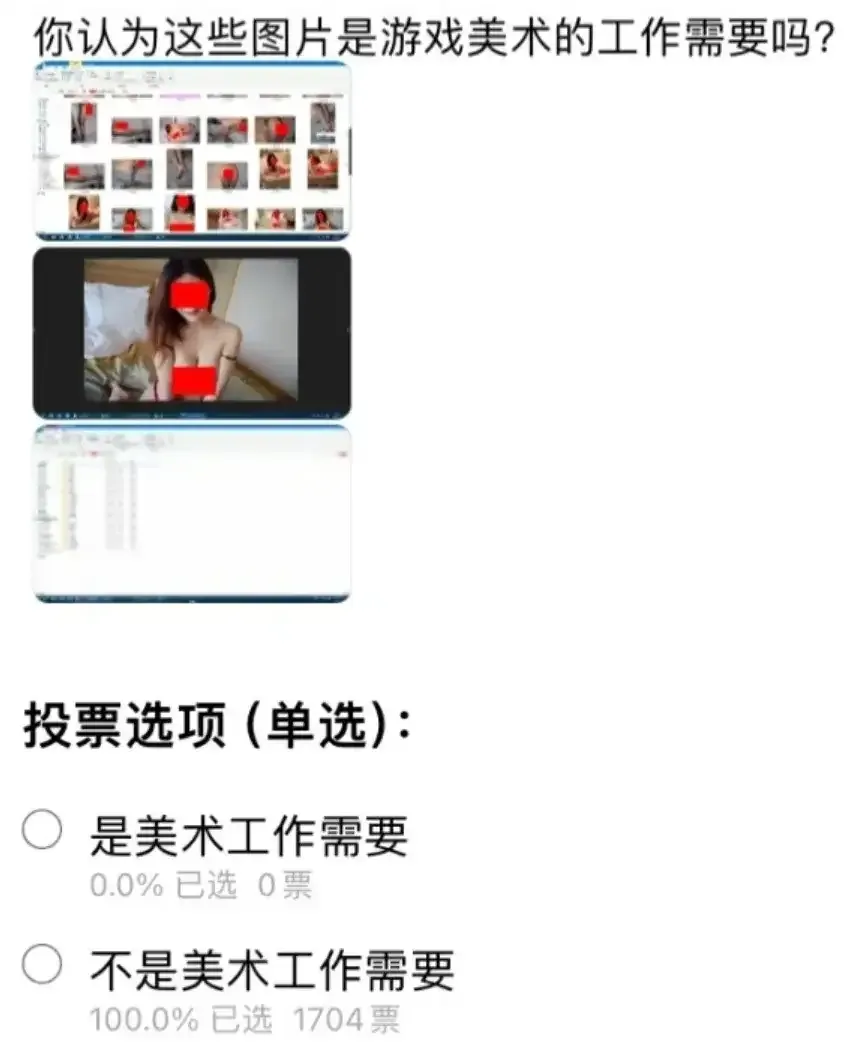
The court ultimately ruled that the company had illegally terminated the labor contract and ordered the company to pay wrongful termination compensation of 386,745 yuan. However, the company, dissatisfied with the judgment, published several blog posts on social media questioning the decision, including a poll result showing 100% internal agreement regarding the “pornographic images.”
Court ruling:
The company’s 100% internal poll result:
This article will not delve into the details of this case. Interested readers can search for and review it themselves.
This article only discusses two issues:
How to distinguish whether images on an art employee’s computer are human body reference images or pornographic images?
How can art employees protect themselves from being dismissed due to reference images?
*This article reflects only the author’s personal views and does not constitute any legal advice or legal opinion.
I. Legal Definition of Pornographic and Obscene Materials
Article 367 of the Criminal Law provides a brief definition of “obscene materials”:
Article 367 [Scope of Obscene Materials]: For the purposes of this Law, “obscene materials” refers to books, films, videos, audio tapes, pictures, and other obscene materials that specifically depict sexual behavior or blatantly promote pornography.
Scientific works on human physiology or medical knowledge shall not be considered obscene materials.
Literary and artistic works of artistic value containing pornographic content shall not be regarded as obscene materials.
A more detailed definition exists in the Interim Provisions on Identifying Obscene and Pornographic Publications (promulgated in 1988, still in effect):
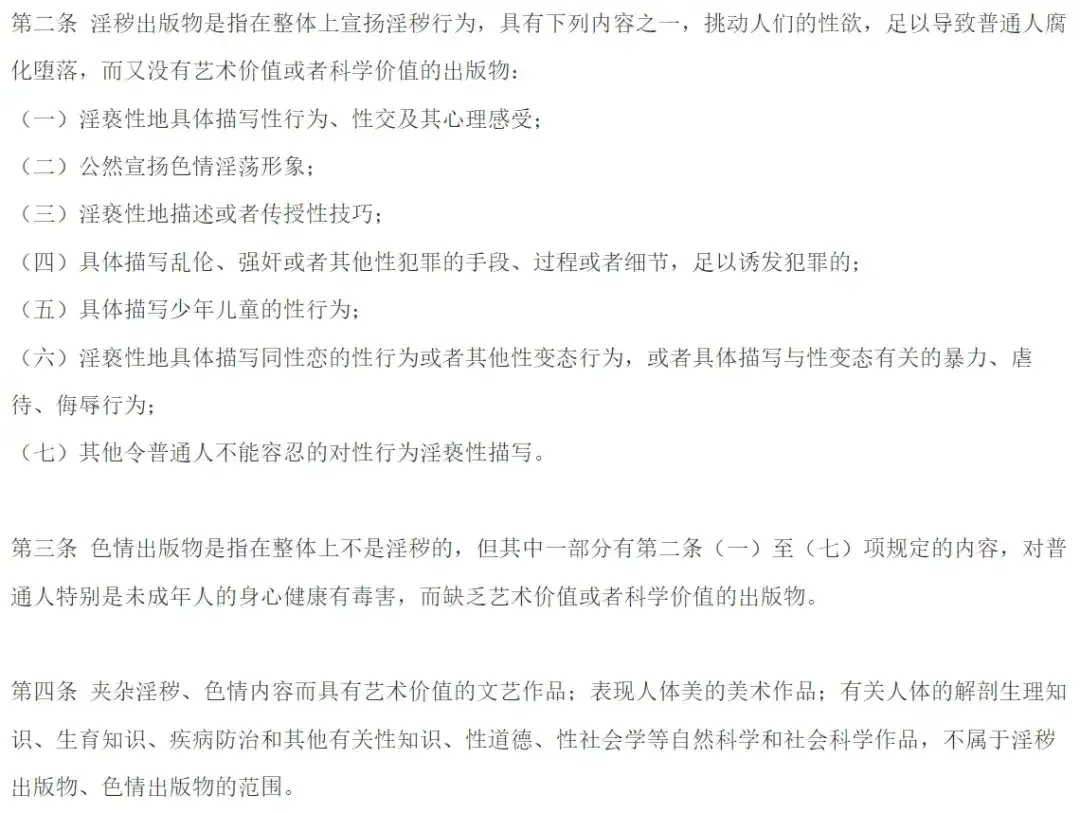
Therefore, the golden rule for determining whether a publication is “pornographic or obscene” is whether it has “artistic value” and “scientific value.”
II. Issues Related to Human Body Reference Images
The Necessity of Human Body Reference Images
In the field of artistic creation, human figure drawing is essentially a required course in all art training programs, especially in industries that require highly accurate reproduction of human dynamics, anatomical structures, and precise perspective.
The game industry, as a combination of visual art and technology, requires extensive human figure-related work whether in 2D character illustrations, game concept art, or 3D modeling. Art personnel need to accurately grasp human proportions, skeletal structure, muscle distribution, and dynamics to ensure characters are vivid and realistic, without appearing awkward or controversial.
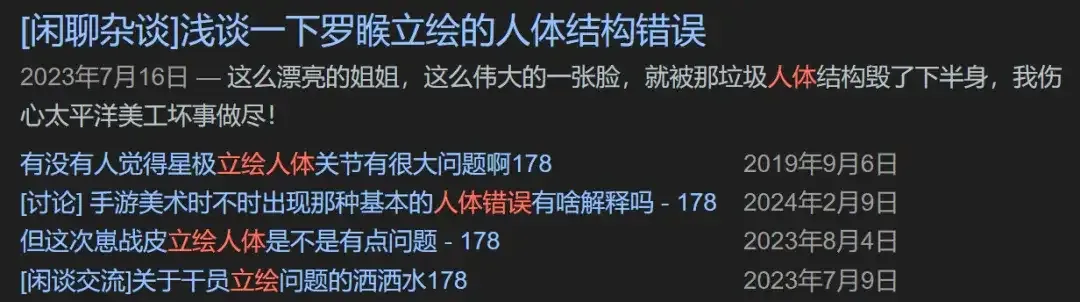
Some senior art masters, with their rich experience and memory, can construct various complex dynamics in their minds and directly draw images that conform to human proportions and structures. However, for most ordinary art personnel, their drawing experience and familiarity with human anatomy may not yet reach this level.
Therefore, in actual creation, they may need a little assistance. By using certain reference images, they can help themselves complete accurate human figure artworks.
Commonly known as: copying/referencing
But copying/referencing is not a bad thing; it is a normal learning method. A large number of art students start by copying to accumulate foundational drawing skills. Copying is not just about imitating others’ work, but also about learning the basics of art such as human proportion, posture, perspective, etc., by referencing excellent works.

In the game development process, “referencing” or using human body reference images is a very common practice. Reference images (whether provided by planners or found by artists themselves) not only help artists quickly determine character poses and composition but also improve work efficiency and ensure drawing accuracy.
Especially since, under normal circumstances, basic human poses do not easily constitute the scope of “copyright” protection. Since human poses are natural phenomena, they lack originality and do not meet the standard of “original expression” required by copyright law. Therefore, simply referencing or imitating human poses does not create serious legal risk. Art personnel using human body reference images for copying or referencing theoretically does not easily involve infringement.
Common pose reference images might include wooden mannequins, competitor works (note: this may constitute infringement), or actual photos of real people. Especially when drawing requires highly realistic reproduction of real human dynamics or actions, referencing real photos can provide more detailed expressiveness and more realistically reproduce actions that the human body can actually perform.
The Necessity of Clothing
In game art creation, whether for 2D or 3D characters, the concept of “clothing” differs significantly from the real world. In fact, the “clothing” of game characters is closer to the concept of body painting, often directly drawn or modeled onto the “body.” This approach is not just for technical or efficiency reasons, but more importantly,
it better highlights the character’s figure and attracts players.
Since the “clothing” in games is actually part of the character’s body, especially when certain characters require “clothing” to completely outline the body shape, artists need to more accurately master human anatomical structure, muscle distribution, and dynamic changes. This means that during the creative process, they may need to reference more images showing complete human body structure, which may include images of the human body with less clothing or even no clothing.
Of course, for professional artists, using nude human body images as reference material is a very common practice. Even in art school training, sketching nude models is one of the basic courses.
Therefore, for art professionals, the presence of nude human body images in their work environment is normal and necessary. It cannot be simply assumed as a violation solely because nude images exist.
III. How to Determine Whether an Art Employee Has Pornographic Images or Human Body Reference Images?
After understanding the basics, we finally arrive at the core of this topic:
If nude images are found on an art employee’s device, how do you determine whether they are pornographic images or legitimate human body reference images? In other words, does the company have the right to dismiss the employee on this basis?
In my personal opinion, the following points can be used for assessment:
Relevance to the Game Project
The most core criterion is the relevance of these images to the current game project. This is crucial because it directly relates to the necessity and reasonableness of these images’ existence.
If the game project is purely chibi-style or has no realistic human characters at all, then the presence of highly realistic nude images is highly questionable.
Either there are unauthorized images, or the employee is doing freelance work at the company. Either situation may constitute a violation of company rules, giving the company reason to consider dismissing the employee.
Conversely, if the game requires drawing realistic human images, or even uses them as a selling point, then having a certain number of human body reference images is completely normal and necessary.
In such cases, where the company likely recognizes and supports this practice, subsequently dismissing an employee on the grounds of having such images after a dispute arises would clearly lack reasonableness and legitimacy and may not be supported by the arbitration tribunal or court.
Image Content
Second, we need to carefully examine the specific content of the images, especially the poses and actions of the figures, assessing their relevance and necessity to the project’s creation.
As listed in the Interim Provisions on Identifying Obscene and Pornographic Publications, if the images are intended to express human beauty and have obvious artistic value, they should not be simply deemed as violative images.
For example, anatomical images showing human structure and proportion, human sculptures or paintings in artworks, artistic photographs expressing human dynamics and posture — these images usually focus on the overall beauty, lines, and form of the human body, rather than deliberately highlighting or emphasizing sexual characteristics. Even further, if the game’s promotional images or character images lean more toward emphasizing sexual characteristics (but please note the product risk), some photos that lack artistic quality may also have necessity and possibility.
However, if the reference images contain explicit sexual acts, sexual provocation, or overly explicit nudity, then their relevance to the game project is questionable. These types of images are generally unrelated to the creative needs of most game projects, unless the game itself is themed around adult content (note: creating adult games within Chinese territory is illegal). Therefore, employees storing such images on their devices often lacks reasonableness and may be considered misconduct.
Quantity, Storage Location, and Time
Even if there are reasonable or slightly questionable reference images, we also need to consider the quantity, storage method, and retention time of these images.
【Quantity】
Collecting a certain number of reference images for a specific project or specific drawing task is understandable. However, if an employee’s device contains an extremely large number of such images, especially far exceeding what the current project requires, it is worth the company’s attention. Typically, a single image may only require a dozen or dozens of reference images. Excessive collection may suggest that these images are not actually or solely intended for work purposes.
【Storage Location】
The storage location of reference images can also reflect the employee’s intent in using them. Reasonable storage locations might include: placing them in clearly marked project folders, in company-designated shared resource libraries, in clearly named work-related folders, or even casually on the computer desktop. These “open and aboveboard” placement behaviors usually indicate that the employee is not worried about others seeing them and are more persuasive as “for work purposes.”
However, if the employee uses hidden files, places images deeply nested in folders, mixes them with personal files, etc., storing related images in a way that makes them difficult to see or has clear concealment or encryption characteristics, this is clearly unreasonable.
【Retention Time】
The retention time of reference images is also an important consideration factor.
Generally, a reasonable approach is to collect and save relevant images during the project or single-image drawing period, and clean up the images promptly after the project ends or drawing is completed, or only save the images that were actually used.
If reference images unrelated to current work are kept for a long time, or even reference images that have never been used are saved, then the reasonableness of these “reference images” is highly questionable.
IV. What Can Companies and Employees Do?
Employees
For employees, risk avoidance is the top priority.
First, if the company has clear relevant policies, employees should carefully read and understand the provisions regarding the use of reference images.
If the company has no clear policy, employees should proactively communicate with their superiors or relevant departments (such as HR, legal, etc.) to seek guidance and retain records of the relevant communication.
When collecting and selecting reference images, exercise caution. Prioritize using internal resource libraries provided by the company or well-known, publicly available professional resources. Avoid using images containing explicit sexual content or that could easily provoke controversy.
Due to the special nature of the project content or images, if required by the producer or superior, when drawing revealing or controversial images, it is recommended to retain relevant planning documents, planning communication records, etc., to demonstrate the reasonableness of collecting related images.
At the same time, during use, it is also recommended to reasonably store relevant images in dedicated work folders, clearly label their purpose, and develop a habit of “delete after use,” regularly cleaning up reference images that are no longer needed. Alternatively, consider embedding the relevant images within PSD files.
Companies
For companies, to reasonably review and handle possible misconduct and legally dismiss non-compliant employees, some preparatory work is necessary.
First, develop clear reference image usage guidelines. These guidelines should detail what is permitted and what is prohibited, and clearly state the consequences of violations in the guidelines and even the employee handbook, including possible disciplinary actions (performance deduction, dismissal, etc.).
At the same time, if the company has the capability, provide necessary resource libraries. For example, establish a company-level reference image resource library, including images used in previous projects, classic images, or images that have been reviewed as reasonable. Provide employees with the legal and appropriate reference materials they need, equipped with sufficient management mechanisms to prevent resource library leaks.
Additionally, internal or external training can be conducted to explain company guidelines, relevant legal requirements, and the consequences of violations, thereby increasing employees’ sensitivity and sense of responsibility regarding the collection and use of reference images.
When suspicious situations are discovered, the company should conduct a thorough investigation, but also give employees the opportunity to explain and listen to their explanations. During the investigation process, thoroughly document all relevant investigation procedures, discoveries, employee explanations, etc., and preserve all relevant evidence and documents for potential legal disputes. When confirming that violations exist and disciplinary action is necessary, prioritize executing the disciplinary measures as recorded in the guidelines or employee handbook.
For whether the relevant images constitute violations, please refer to the content above.
V. Additional Knowledge: Can Companies Review Employee Computer Content?
The issue of whether it is reasonable for companies to install surveillance cameras was previously discussed:
Currently, the law does not have clear provisions on whether a company can inspect employee work computers.
Current laws and regulations, such as the Personal Information Protection Law, have very clear standards for collecting and viewing personal privacy information. However, company-issued work computers are essentially corporate assets and equipment. In principle, since they are not the employee’s personal computer and are merely provided for the employee to use for work, the data stored there and collected by the company would not be considered the employee’s personal information, and would not constitute beyond-authority processing. Therefore, if a company installs monitoring software or hardware, when conducting necessary inspections and reviews of company equipment, it is also difficult to directly deem the company’s actions as illegal collection.
However, it is recommended that when a company chooses to search an employee’s work computer out of necessary compliance review, it should also have reasonable grounds. During the review process, only open content such as folders and files on the device should be examined; software or text that may contain private information, such as employees’ social software chat records, should not be directly examined.
Of course, a better practice is to stipulate in advance in normative documents such as the employee handbook the nature of employee work equipment, usage guidelines, company review methods, etc., to avoid unnecessary legal risks.